For a Balzac property with a house and detached shop, decide which building and fixtures the heater will serve before comparing equipment. A remote shop can add distribution losses, freeze exposure and different use patterns. Verify the address, land use and water connection: the hamlet, co-op areas and commercial service area do not share one universal arrangement.
- A house-and-shop proposal needs a building-by-building demand and pipe-route assessment.
- Residential and commercial Balzac service descriptions must not be interchanged.
- Long underground or exposed water lines introduce risks a larger tank cannot solve.
- Permits and trade qualifications must match the actual building use and installation.
01 /What exactly needs hot water in the second building?
Identify the fixtures and their use before assuming the house heater should serve the shop. A handwashing sink used intermittently, a shower used after work and equipment washing have different volume, temperature and timing requirements. Record whether use is domestic, business-related or associated with a tenancy. The design and permit discussion need that information. Do not size a shop from floor area or select a household appliance for a process without checking its intended use. A small intermittent load may justify a different approach from a building with sustained demand.
Make a simple demand list for each building: fixture, expected flow, duration, overlapping uses and periods without occupancy. Ask the designer to distinguish water intended for people from any specialized washing process. Chemicals, hoses and equipment connections may create cross-connection concerns requiring separate protection. A single total in litres conceals these differences. The size calculator can organize household use, but it does not engineer a commercial process or approve connections between buildings.
02 /Should one heater serve both buildings?
Compare a central heater against equipment near the remote demand using the actual pipe route. A long supply line stores cooled water between uses and loses heat while hot water travels through it. Recirculation may reduce waiting, but a continuously heated underground loop can impose ongoing losses. Separate equipment reduces the hot distribution distance while adding appliance servicing, electrical or gas connections and freeze-protection responsibilities. Neither arrangement is automatically better. Ask for a written explanation of how each option behaves during ordinary use and during an extended period when the shop is empty.
Where an existing house line serves the shop, establish what is buried, its material, insulation, depth and accessibility using records and professional inspection. Do not assume a visible insulated section proves the underground route is protected. If excavation or a new service is proposed, utility locating and private-service identification are separate planning tasks. Keep that work in the comparison instead of presenting the heater purchase as the full project. A central appliance with ample capacity still cannot deliver instant hot water through a cooled remote branch.
03 /Which Balzac water-service description applies?
Verify the property account and parcel because official descriptions differ by service area. Rocky View’s Balzac community page distinguishes residential hamlet wells, named Rocky View Water Co-op areas and commercial service east of Highway 2. Its drinking-water page also lists East and West Balzac among County-served areas. Read these as service-area information that needs address confirmation, not permission to label every Balzac house as well supplied or every property as connected to the commercial network. Ask County utilities to resolve any mismatch between an older community description and the current connection.
Confirm wastewater independently. A County water connection does not establish a County sewer connection, and a rural mailing address does not establish private sewage. This affects how a tank drain-down, treatment backwash or condensate route is planned. If the house and shop share a private supply, document pressure equipment and any restrictions during simultaneous use. A complaint that both hot and cold flow collapse when the shop operates can point to supply capacity or piping. Increasing household hot-water storage would not correct that pressure problem.
04 /What does winter require from an intermittent shop?
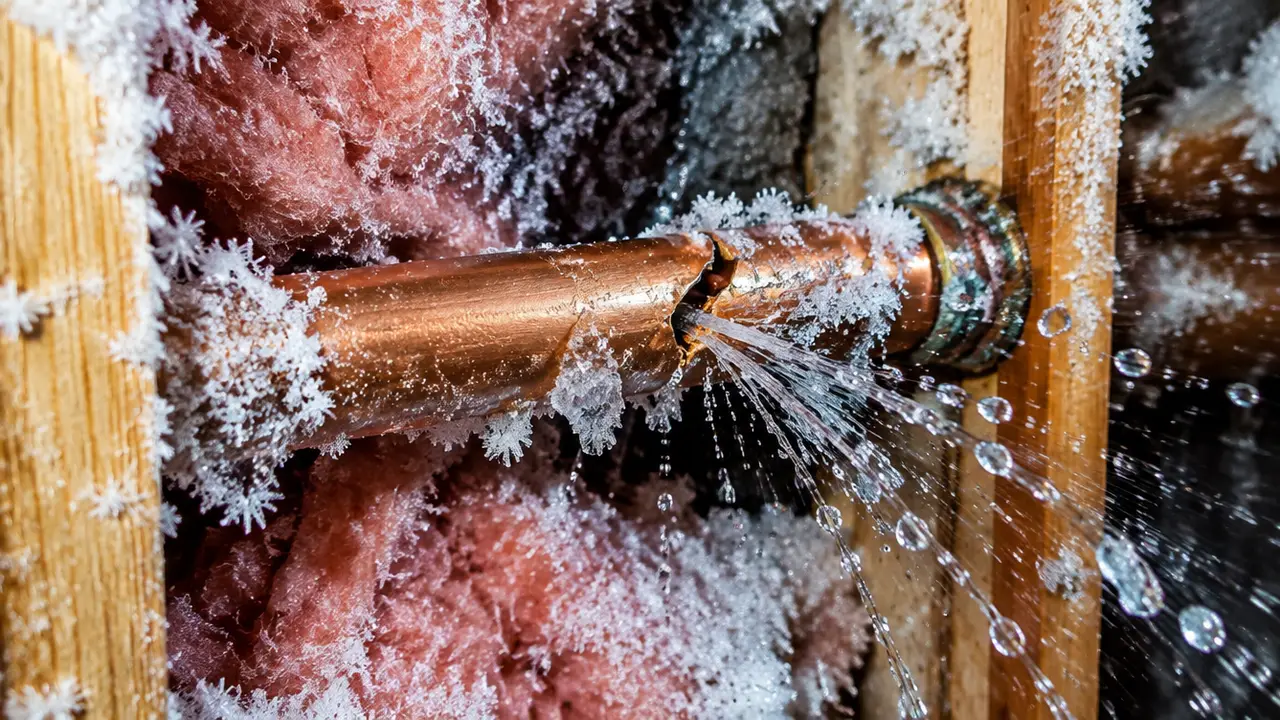
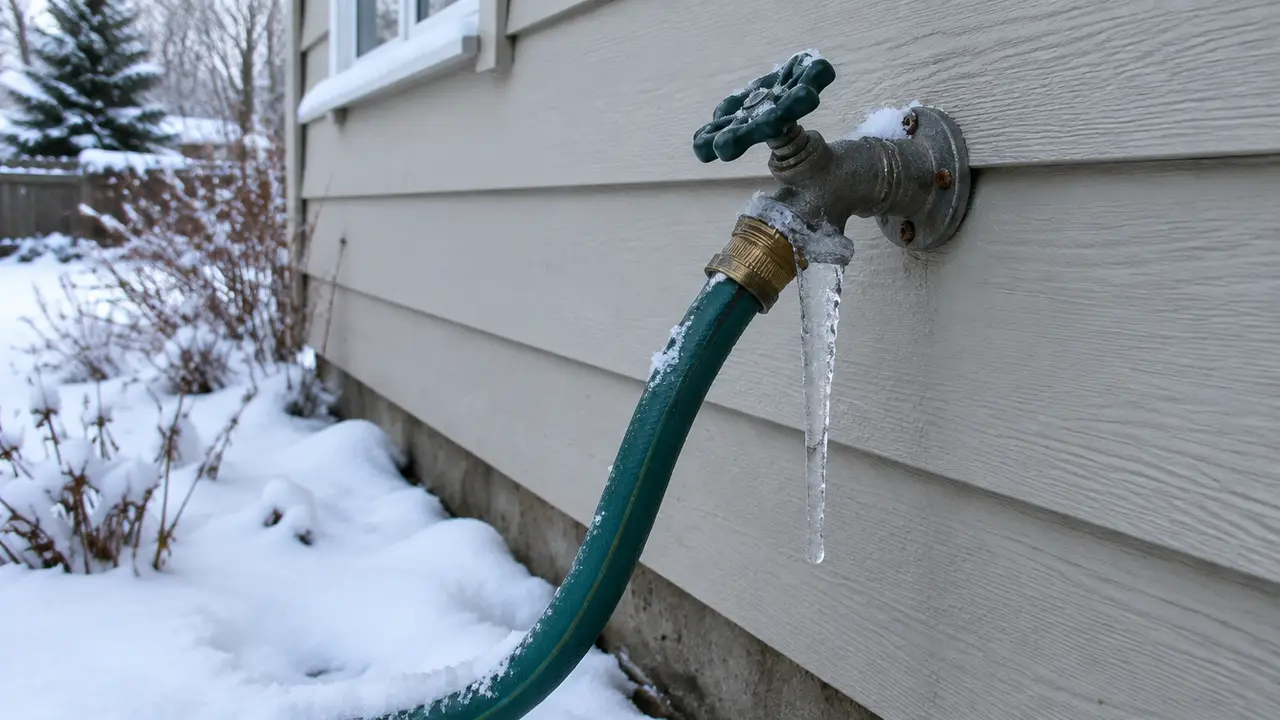
The design needs an explicit answer for loss of building heat, loss of electricity and absence. A water heater thermostat protects its stored water only within the appliance’s operating limits; it does not protect a distant faucet, wall branch or buried connection. Insulation slows cooling rather than adding warmth. Ask whether the shop remains heated continuously and how low-temperature alarms reach someone who can respond. If the plan involves winterization, have a qualified plumber prepare a complete procedure for trapped water and appliance isolation. Never energize an empty electric heater.
Check the proposed appliance location against the room’s actual use. Vehicle storage, combustible materials, dust and workshop activities can affect suitability and servicing access. The installer must evaluate applicable equipment instructions and code requirements rather than transplanting a basement design into a shop. Do not invent an ignition-height or clearance rule from a photograph. Give the contractor the building use, fuel information and room layout so the qualified person can specify the correct arrangement. A model intended for one environment may not be approved for another.
05 /How should jurisdiction and qualifications be confirmed?
Balzac is a Rocky View County community, but its name is also used broadly near Airdrie and Calgary. Match the civic address and legal description to the municipal property record, then confirm the land use and building involved. For a County installation, Rocky View’s inspection requirements identify the subtrade process and responsibilities. Ask which permits cover gas, plumbing, electrical changes and any work between buildings. A project affecting a business or separate occupancy should not be described to the permit issuer as a simple household tank swap if that leaves out relevant scope.
Confirm a qualified plumber for water piping, a certified gasfitter for regulated gas and combustion work, and an electrician for applicable circuit work. Verify credentials for the activities each person undertakes. Do not disconnect gas, modify a vent or improvise a shop circuit. If a gas smell or carbon monoxide alarm occurs, leave and call the appropriate emergency service from outside. The crew should explain commissioning for each building, including safe temperature delivery and the response to shut-offs or loss of supply.
06 /What makes two house-and-shop quotes comparable?
Ask both contractors to price the same buildings, fixtures and demand assumptions. Each scope should state equipment, new service routes, restoration, drainage, insulation, freeze strategy, permits, disposal and commissioning. Separate necessary safety corrections from optional convenience improvements. One quote for a heater alone and another for a complete remote service are not comparable, even if both are labelled hot-water replacement. Use the energy cost tool with your rates, while recognizing that a basic appliance estimate may omit long distribution losses and the cost of maintaining building heat.
HAUSE Home is an independent information and request network. A project request should identify the municipality, house and shop uses, current supply and whether the goal is faster delivery, greater capacity or new fixtures. It does not establish contractor coverage or a price. Compare equipment in the tank explorer after the service concept is clear, and retain a drawing or route description with the completed job records. That documentation helps future maintenance avoid mistaking the household line for the shop’s isolation point.
07 /What records help when the shop use later changes?
Retain the approved building use, equipment model, service route and isolation information. A future conversion from occasional handwashing to frequent washing or a separate occupancy can change demand and regulatory questions. Ask the responsible authority and qualified designer about that new scope rather than assuming the existing installation is approved for any use. The original design should state its intended fixtures and operating pattern clearly. Where a service crosses between buildings, keep private-line information with property records so future excavation or maintenance does not rely on memory. These records help distinguish a genuine demand increase from an emerging heater fault and make any later upgrade easier to assess.
FAQQuestions people ask
Does every Balzac property use a well?
No. Official County information describes multiple residential, co-op and County service areas. Verify the actual account and parcel rather than applying one description to the whole area.
Will a bigger house tank heat the shop faster?
It can increase available storage but does not remove the cooled water in the connecting pipe. Delivery time and distribution loss need their own assessment.
Is an insulated pipe safe from freezing?
Insulation slows heat loss. It does not create heat, and protection depends on temperatures, exposure, duration and the complete design.
Can I use a household sizing result for business washing?
Use it only for the household demand it represents. A process load needs specific flow, temperature, duty and safety information assessed by the appropriate designer.