In Alberta, gas and plumbing permits come from municipalities accredited under the Safety Codes Act, or from agencies working for the province where a municipality is not accredited. Gas work needs a certified gasfitter or a registered apprentice. Natural Resources Canada estimates about 87% of detached homes heat water with gas. A like-for-like gas tank plans at $1,800 to $3,200 installed in 2026.
- Permits come from your accredited municipality or, in unaccredited areas, an agency working for the Alberta Safety Codes Authority; Calgary and Edmonton publish their own homeowner rules.
- Gasfitter (Class A and B) and Plumber are compulsory certification trades in Alberta, so regulated gas and plumbing work needs a certified tradesperson or a registered apprentice.
- NRCan estimates natural gas heated water in 86.5% of Alberta's single detached homes in 2023, with electricity at 12.5%, up from 6.1% in 2000.
- When checked in September 2026, Calgary's residential CEIP financing was closed until winter 2026/2027 and Edmonton's was waitlisted; no province-wide water heater rebate was found.
- Near-freezing winter inlet water, hard water in Calgary and snow or chinook ice at wall vents are the Alberta reasons tanks fall short or lock out.
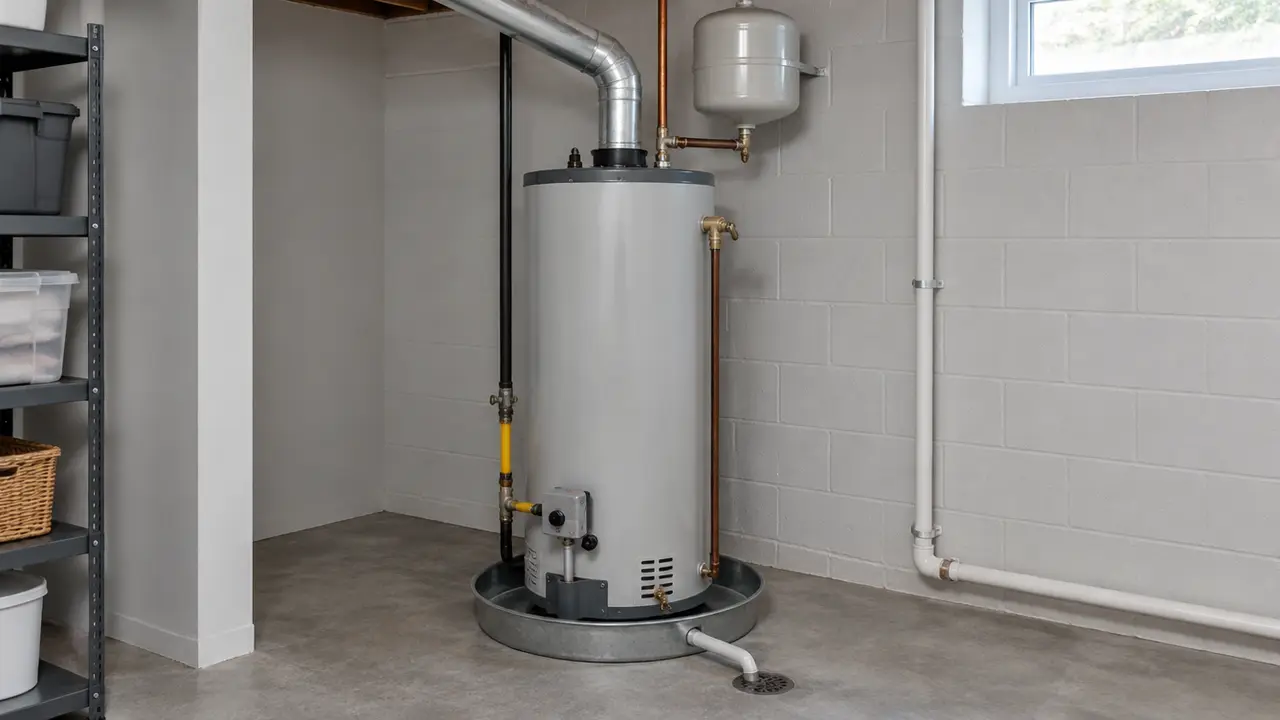
01 /What makes a water heater job different in Alberta?
Four things shape an Alberta replacement more than the tank itself: nearly every house runs on natural gas, permits come from whichever body administers the Safety Codes Act where you live, winters chill the incoming water and bury wall vents, and Calgary's water is hard. Everything below was checked on official pages in September 2026; confirm anything that affects your job.
| Topic | What applies in Alberta |
|---|---|
| Permits | Accredited municipalities issue their own; elsewhere, agencies working for the Alberta Safety Codes Authority |
| Gas work | A certified Gasfitter (Class A or B) or a registered apprentice |
| Usual fuel | Natural gas in about 87% of single detached homes (NRCan, 2023) |
| Incentives | CEIP property-tax financing where offered; no province-wide rebate found |
02 /Who issues gas and plumbing permits in Alberta?
The Government of Alberta says Safety Codes Act permits are available from municipalities accredited to administer the Act and, in non-accredited municipalities, from agencies that provide inspection services for the province. The Safety Codes Council, which the province points to, describes those agencies as working for the Alberta Safety Codes Authority, and its accredited-organization search tells you which one covers your address.
The two largest cities publish homeowner rules, and they differ:
- Calgary. Homeowners cannot take out a gas permit unless they are a first-class or second-class (journeyman) gasfitter; otherwise a licensed contractor pulls it. The City lists three water heater permit triggers: changes to gas lines upstream of the heater's shut-off valve, changes to the venting, and a change of heater type, such as natural draft to direct vent. For a true like-for-like swap, ask 311 rather than assume.
- Edmonton. A gas permit is required when installing, altering or relocating gas equipment such as water heaters. The homeowner gas permit is limited to renovations or a re-test of an existing system in a single detached house the applicant owns, lives in and works on personally, and homeowners may not install a new gas line. When checked, an existing-home residential permit outside a House Combo Permit cost $120 plus a $4.80 safety codes fee, effective until December 31, 2026.
Smaller centres follow the same pattern with a different issuer and fee. The permits and code guide explains what the inspector checks.
03 /Who is allowed to install a water heater in Alberta?
Certified trades. Alberta's Tradesecrets site lists Gasfitter Class A, Gasfitter Class B and Plumber as compulsory certification trades, so that regulated work must be done by a certified journeyperson, a holder of a recognized trade certificate, or a registered apprentice. Class B covers natural gas and propane equipment up to 400,000 BTU/h, far above any household water heater. In practice, a contractor employing a certified gasfitter does the job and takes out the permit; a heat pump or electric tank may add an electrical permit. See who installs water heaters.
04 /Why do most Alberta homes heat water with natural gas?
Because gas is what most Alberta houses are piped for. Natural Resources Canada's Comprehensive Energy Use Database estimates the split in single detached homes below; electricity's share has roughly doubled since 2000, but gas still dominates.
| Fuel | 2000 | 2023 |
|---|---|---|
| Natural gas | 92.6% | 86.5% |
| Electricity | 6.1% | 12.5% |
| Heating oil, propane, coal and wood | 1.3% | 1.0% |
A furnace already brings gas to the mechanical room, and using this site's representative values a 40,000 BTU/h gas tank puts about twice as much heat into the water each hour as one 4.5 kW electric element. Running costs depend on current rates, so compare yours in the Energy Cost Comparer. For the popular alternatives, condensing tankless suits back-to-back showers where the gas line can be upsized, and a heat pump suits a warm basement with room for a 240 V circuit; the tankless vs tank and heat pump guides weigh both.
05 /Are hot water tanks rented in Alberta?
Some are, but we found no official count, and renting appears far less common here than in Ontario. If yours is rented, the fee runs as long as the tank stays and ending early can bring a buyout and removal charge, so read the agreement before booking a replacement and compare it in the Rent or Buy Calculator. Cancel or buy out a rented water heater covers the steps.
06 /What rebates or financing apply in Alberta (as checked September 2026)?
We found no province-wide water heater rebate. The main program is the Clean Energy Improvement Program (CEIP), run by Alberta Municipalities with participating municipalities, which finances upgrades through the property tax bill. Its water heating list covers ENERGY STAR heat pump water heaters, gas tankless heaters, high-efficiency storage tanks and drain water heat recovery, with local criteria.
| Item | Calgary | Edmonton |
|---|---|---|
| Status | Closed until winter 2026/2027 | Nearing capacity; new applications waitlisted |
| Amount | Up to 100% of costs, to $50,000 | $3,000 to $50,000 |
| Interest | Estimated 6.00%–6.10%, fixed at signing | 6.00% fixed, up to 20 years |
| Water heater notes | See CEIP's upgrade list | Storage tanks not eligible; tankless 0.72 UEF or higher |
CEIP listed 26 residential municipalities, including Airdrie, Lethbridge, Medicine Hat and Strathcona County, each with its own intake. Federally, the Canada Greener Homes Grant is closed and the income-qualified Affordability Program did not list Alberta. See the rebates guide.
07 /How does an Alberta winter affect a water heater?
Colder water arrives, the vent takes a beating, and a heat pump has less warmth to draw on. Calgary's published drinking water results for 2025 ranged from 1.0 to 20.0 °C, and here is what that swing does to one ordinary gas tank, using this site's representative values.
| Measure | 1 °C inlet | 20 °C inlet |
|---|---|---|
| Recovery | about 146 L/h | about 225 L/h |
| Tank water for an 8-minute 40 °C shower | about 44 L | about 35 L |
| First-hour hot water (142 L usable plus recovery) | about 288 L | about 367 L |
| Back-to-back showers covered | about 6 | about 10 |
That is almost 40% fewer showers in deep winter, which is why a tank that coped in September runs short in February. Size on a winter inlet temperature; why hot water runs out in winter explains the physics and the Hot Water Morning Simulator replays your own morning.
Wall-vented heaters add a second risk. Drifts, shovelled snow and exhaust frost can close a power-vent or direct-vent terminal, and after a chinook, roof meltwater can refreeze over it. Clear it after storms and keep the power vent in winter steps handy. A heat pump water heater, which draws heat from the room, runs well in a heated basement but leans on its elements in a cold one.
Calgary's water is hard, which the City attributes to calcium and magnesium from the Bow and Elbow rivers; 2025 ranges ran from about 141 to 274 mg/L as calcium carbonate depending on the plant, highest from December to February. Ask about flushing, anode rods and, for tankless units, descaling.
08 /What does a hot water tank replacement cost in Calgary or Edmonton?
No official Alberta price data exist, so use this site's national 2026 planning ranges. Venting moves Alberta quotes most, because many homes pair an older gas tank with a newer high-efficiency furnace.
| Situation | Planning range | Why it comes up |
|---|---|---|
| Like-for-like atmospheric gas tank | $1,800–$3,200 | The most common job |
| Liner for an orphaned chimney | $300–$1,500 extra | The furnace now vents through plastic, leaving the tank alone in a large chimney |
| Power-vent gas tank | $3,000–$5,000 | The usual alternative to relining |
| Condensing gas tankless conversion | $4,500–$8,000 | Includes gas line upsizing and new venting |
| Heat pump water heater | $4,000–$7,000 | Plus $300–$1,500 if a new circuit is needed |
Rural jobs may add gasfitter travel time. The full list of add-ons is in the replacement cost guide.
09 /What should you ask an installer in Alberta?
- Who takes out the permit?
Which issuer covers your address, whether the permit fee is included, and when the inspection is booked.
- Who does the gas work?
The gasfitter's name and certificate, which you can check with the Tradesecrets lookup.
- What happens to the vent?
Whether the chimney still suits the tank, or where a wall terminal goes relative to the snow line.
- What inlet temperature did you size for?
A February figure near freezing, not a summer one.
- How will hard water be handled?
Flushing intervals, the anode and, for tankless units, descaling.
- Does it fit CEIP?
If your municipality's intake is open, whether the model and contractor qualify.
HotWaterTank.ca is an independent information and service-request network and does not install, rent or sell water heaters. Request quotes and compare the answers, and see the British Columbia, Saskatchewan and Canada guides for how rules change elsewhere.
FAQQuestions people ask
Do I need a permit to replace a hot water tank in Calgary?
Possibly. The City lists changes to upstream gas lines, venting or heater type as triggers, and only a journeyman gasfitter homeowner may take out a gas permit. Call 311 to confirm a like-for-like swap.
Can a homeowner get a gas permit in Edmonton?
Only for renovations or a re-test of an existing gas system in a single detached house you own, live in and work on yourself. Homeowners may not install a new gas line.
How much does a hot water tank replacement cost in Edmonton?
As a 2026 planning estimate, a like-for-like gas tank plans at $1,800 to $3,200 installed and a power-vent tank at $3,000 to $5,000, before the permit fee and any venting work.
Is a tankless water heater worth it in Calgary?
It can be for back-to-back showers, but near-freezing winter water and hard water work against it. Size for February, plan on descaling, and budget $4,500 to $8,000 as a 2026 planning estimate.
Do heat pump water heaters work in Edmonton winters?
Yes, because they sit indoors and draw heat from the room. In a heated basement they run efficiently; in a cold room they rely more on their electric elements.
Is there a heat pump water heater rebate in Alberta in 2026?
We found no province-wide rebate when checked in September 2026. CEIP finances ENERGY STAR heat pump water heaters where a municipality's intake is open.
SOURCESSources and further reading
- Government of Alberta — Permits and Alberta's safety code system
- City of Calgary — Homeowner electrical and plumbing permits
- City of Edmonton — Gas permits, residential
- Natural Resources Canada — Comprehensive Energy Use Database, Alberta residential Table 29: single detached water heater stock by energy source
- City of Calgary — Residential Clean Energy Improvement Program