As a 2026 planning estimate, replacing a standard 40- to 50-gallon gas hot water tank like for like in Canada typically plans at $1,800 to $3,200 installed, and an electric tank at $1,400 to $2,600. Power-vent tanks plan at $3,000 to $5,000, heat pump tanks at $4,000 to $7,000 and gas tankless conversions at $4,500 to $8,000. Venting, gas line, electrical and code upgrades move the price most.
- Like-for-like replacement of an atmospheric gas tank is the cheapest gas option; switching type is where costs climb.
- Add-ons such as an expansion tank, venting changes, a larger gas line or a new circuit often decide the final price.
- Emergency replacement after a leak usually costs more and leaves less choice than a planned one.
- A complete quote names the heater, its first-hour rating, permit, venting, expansion tank, disposal and warranty terms.
- All figures are planning estimates in CAD for 2026, not quotes.
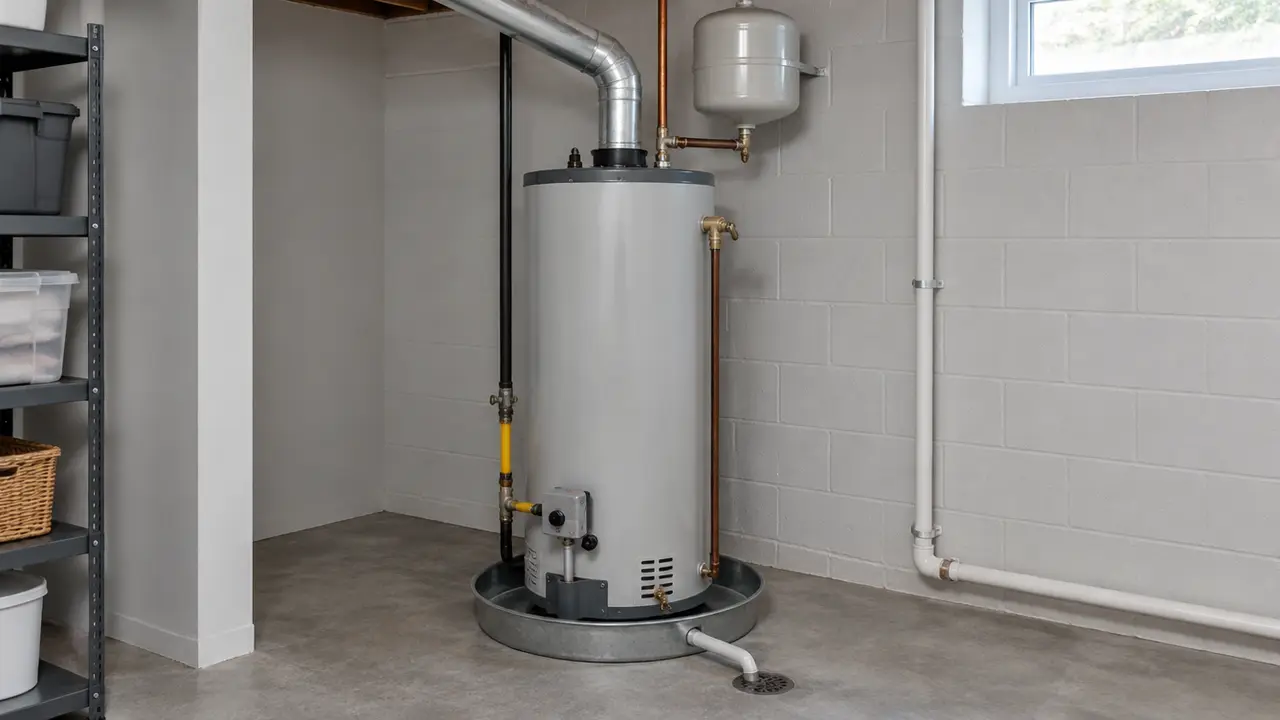
01 /How much does it cost to replace a hot water tank?
The price of a replacement is the heater plus the work to connect it safely to your gas or electricity, your water, and, for gas, your vent. When the new heater is the same type and size as the old one and the existing installation is in good order, the job is quick and the cost is near the bottom of the range. When the type changes, or the old installation does not meet current code, the extra work can cost as much as the heater.
| Type | Planning range installed | What drives the range |
|---|---|---|
| Electric tank, 40–60 gal | $1,400–$2,600 | Size, access, whether the circuit is reusable |
| Atmospheric gas tank, 40–50 gal, like for like | $1,800–$3,200 | Size, chimney or vent condition, access |
| Direct-vent gas tank | $2,800–$4,800 | Wall penetration and vent length |
| Power-vent gas tank, 40–50 gal | $3,000–$5,000 | New plastic vent run, electrical outlet, size |
| Condensing gas tank | $4,000–$6,500 | Venting, condensate drain, size |
| Heat pump water heater, 50–80 gal | $4,000–$7,000 | Circuit, condensate drain, space, size |
| Gas tankless (condensing), converting from a tank | $4,500–$8,000 | Gas line upsizing, venting, water treatment |
These ranges are for the heater and a standard installation. They do not include program rebates, which may lower the net cost of high-efficiency options, or major work such as moving the heater to another room.
02 /Which add-ons change the price most?
Quotes for the same tank can differ by more than a thousand dollars because of the work around it. These are the common add-ons and their planning ranges.
| Add-on | Planning range | When it applies |
|---|---|---|
| Thermal expansion tank | $250–$500 | Closed systems with a check valve, backflow preventer or pressure-reducing valve |
| Chimney liner or vent connector replacement | $300–$1,500 | Orphaned or deteriorated chimney on an atmospheric tank |
| New plastic vent run to a wall | $300–$1,200 | Switching to power vent, direct vent, condensing or tankless |
| Gas line upsizing | $300–$1,200 | Higher-input tankless units or larger tanks |
| New electrical circuit or outlet | $300–$1,500 | Heat pump tanks; power-vent outlet; electric upgrades |
| Condensate drain or pump | $100–$400 | Condensing gas, tankless and heat pump units |
| Thermostatic mixing valve | $250–$600 | Delivering about 49 °C at taps while storing at 60 °C |
| Drain pan and leak sensor with automatic shut-off | $150–$600 | Finished basements, upper floors, closets |
| Removal and disposal of the old tank | $0–$150 | Often included; confirm |
| Evening, weekend or emergency service | Premium varies | Replacing after a failure |
Permit fees are set by each municipality or provincial authority and are not included in these ranges. Ask each contractor whether their price includes the permit and inspection.
03 /Why do quotes for the same tank differ so much?
- Code upgrades. An old installation may be missing a proper T&P discharge pipe, a sediment trap and shut-off on the gas line, an expansion tank, or correct vent connectors. A careful installer includes them; a cheap quote may not.
- Venting. A like-for-like atmospheric tank reuses the vent if it is sound. A furnace upgrade may have left the water heater alone in an oversized chimney, which can need a liner or a switch to a power-vent tank.
- Access. A tank in a tight closet, down narrow stairs or behind finished walls takes longer to remove and install.
- Size and first-hour rating. Larger tanks and higher-input models cost more, and a correctly sized heater may differ from the one you have.
- What is included. Permit, disposal, expansion tank, mixing valve, labour warranty and follow-up visits vary between quotes.
- Timing. A planned replacement lets you compare quotes; an emergency one after a leak usually does not.
By province. The ranges above apply nationally, but the fuel, the licensing rules, rental habits and rebates that shape a quote differ by region. The province guides show what moves prices locally: Alberta, British Columbia, Saskatchewan, Manitoba, Ontario, Quebec and Atlantic Canada.
04 /Worked examples
| Scenario | Components | Planning total |
|---|---|---|
| 40-gal atmospheric gas tank, like for like, basement, closed system | Tank installed $1,800–$3,200 + expansion tank $250–$500 | $2,050–$3,700 |
| Furnace upgraded, chimney now orphaned: switch to a 50-gal power-vent tank | Power-vent installed $3,000–$5,000 + outlet $300–$1,500 (if none nearby) | $3,300–$6,500 |
| Electric tank to heat pump water heater | Heat pump installed $4,000–$7,000 + condensate drain $100–$400 | $4,100–$7,400 before any rebate |
The middle example shows why venting deserves attention before you get quotes. Where a sound chimney can be relined, staying with an atmospheric tank may cost less; where it cannot, the power-vent path is the safer one. The third example assumes the existing 240 V circuit can be reused; if a new circuit is needed, add its range. Compare those installed prices with the running-cost differences in the Energy Cost Comparer: a higher price can pay back over the heater's life, or not, depending on your rates.
05 /Is renting cheaper than buying?
Rented tanks are common in parts of Canada, especially Ontario. Renting avoids the purchase price and usually covers repairs, but the monthly fee continues for as long as the tank stays and often rises every year. Over a tank's life, buying often costs less, but the answer depends on your fee, its annual increase, the purchase price and the life you assume.
Put your own numbers into the Rent or Buy Calculator. It shows the cumulative cost of each path, the break-even year and the saving over the life. Before you replace a rented tank, check the buyout schedule and cancellation terms in your agreement; the rental vs buy guide explains what to look for.
06 /What should a complete quote include?
- The heater
Type, fuel, capacity, first-hour rating (or flow rating for tankless), UEF, and the manufacturer's tank and parts warranty terms.
- The permit
Whether the contractor pulls the gas, plumbing or electrical permit and books the inspection, and whether the fee is included.
- Venting and gas
Whether the existing vent is reused, relined or replaced; gas line size and any upsizing; sediment trap and shut-off.
- Water side
Shut-off valves, T&P discharge pipe to code, expansion tank, mixing valve and drain pan, each included or not.
- Electrical
Circuit or outlet work, and whether an electrician's permit is needed.
- Removal and clean-up
Draining, removal and disposal of the old tank.
- Labour warranty and follow-up
How long workmanship is covered and what happens if something leaks after installation.
Line quotes up item by item before comparing totals. Remember that gas work must be done by people authorized in your province: in Ontario, TSSA says only registered fuels contractors may legally do fuels work; in Calgary, the City states that only an Alberta certified journeyman gasfitter homeowner can pull a homeowner gas permit; British Columbia allows eligible homeowners to obtain a homeowner gas permit that covers water heater replacement. See permits and code and the installation guide.
07 /How to keep the cost down without cutting corners
- Replace before it fails. The Tank Lifespan Predictor tells you when to start planning, so you can compare quotes instead of taking the first available tank.
- Size it correctly. An oversized tank costs more to buy and loses more heat on standby; an undersized one disappoints. Use the size calculator.
- Check incentives before you sign. Programs change; see water heater rebates in Canada and confirm eligibility rules first.
- Do not skip safety items. An expansion tank, a proper discharge pipe, a CO alarm and correct venting cost little compared with the damage they prevent.
- Keep the paperwork. Permit, invoice and model details help with warranty claims, insurance and resale.
HotWaterTank.ca is part of HAUSE Home, an independent information and service-request network. It does not sell or install water heaters and does not rank brands. When you are ready, you can request quotes and compare them against this checklist.
FAQQuestions people ask
How much does a hot water tank replacement cost in Calgary or Edmonton?
As a 2026 planning estimate, a like-for-like 40- to 50-gallon gas tank typically plans at $1,800 to $3,200 installed, before add-ons such as an expansion tank or vent changes. Local quotes vary with access and venting.
How much does it cost to install a tankless water heater?
Converting from a tank to a condensing gas tankless unit typically plans at $4,500 to $8,000 installed in 2026, mostly because of gas line upsizing and new venting.
How much does a heat pump water heater cost installed?
As a 2026 planning estimate, $4,000 to $7,000 installed before rebates, plus any new circuit or condensate drain the house needs.
Why is a power vent water heater more expensive?
The heater has a fan, controls and a sealed vent system, and the installation adds a plastic vent run through a wall and an electrical outlet.
Is hot water tank replacement covered by home insurance?
Policies usually cover sudden water damage from a leak, subject to terms, but not the worn-out tank itself. Check your policy wording or ask your broker.
Does the price include removing the old tank?
Often, but not always. Ask whether draining, removal and disposal are included, and whether a rented tank must be returned to its owner.