A Millarville tank replacement should make future inspection and maintenance practical. Confirm the water source and wastewater destination, then ask the plumber how the tank can be isolated, serviced and drained safely. County utility service includes named Millarville subdivisions, so surrounding acreage assumptions are unreliable. Verify the parcel and permit scope before selecting the heater.
- Flushing is a maintenance decision based on equipment instructions and condition.
- A septic or pump-out arrangement needs consideration before a large drain-down.
- County service to Millarville subdivisions does not describe every nearby property.
- Anode and valve access should survive the new installation layout.
01 /Why plan servicing before the new tank goes in?
The easiest time to improve maintenance access is while the old equipment is being replaced. Ask how a technician will reach the drain valve, isolation valve, anode and heating components after installation. An anode that needs overhead withdrawal space may be difficult to service under a low ceiling unless the manufacturer offers a suitable alternative. A valve hidden behind a treatment unit or finished enclosure creates avoidable difficulty. Photograph labels and keep the installation manual. A replacement should provide a repeatable maintenance procedure, not just fresh equipment in the same inaccessible corner.
02 /Does every tank need the same flushing routine?
No. Follow the model instructions and ask the plumber to consider the tank’s age, condition and observed deposits. Sediment can collect at the bottom and affect heat transfer, but a rumbling sound alone does not establish a universal maintenance interval or local water chemistry. A neglected drain valve may clog or fail to reseal when disturbed. Flushing involves hot water, appliance isolation and disposal, so the professional should decide how to proceed safely. The maintenance guide helps organize records; it cannot inspect the vessel or predict the behaviour of an old valve.
03 /Where can drained water safely go?
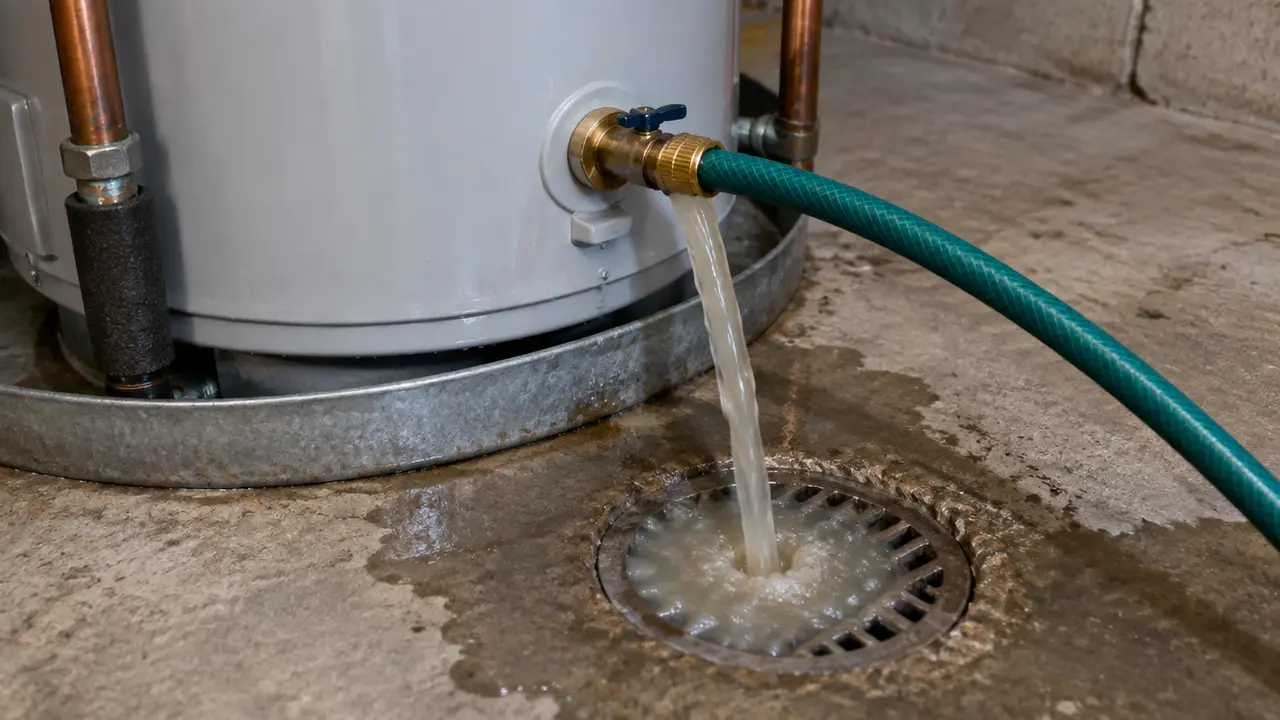
Identify the wastewater system and a suitable disposal route before opening a drain. Hot water can injure people and damage unsuitable hoses or surfaces. If the property has private sewage or a pump-out system, discuss the volume and discharge rate with a qualified professional rather than assuming an unrestricted floor drain. A sump is not automatically an acceptable destination for every kind of discharge. Chemical cleaning or treatment waste can raise separate disposal questions. Tankless condensate also needs a designed route. Never discharge onto a path where it can create an ice hazard during cold weather.
04 /What does the County say about local services?
Foothills County lists Millarville among its hamlets and names Millarville subdivisions in its water-service information, including Millarville Landing in utility billing material. Those references prevent a blanket claim that every Millarville-area home uses a well. They also do not prove that every acreage has County service. Check the account, subdivision documents and parcel with the utility contact. Establish wastewater service separately. A supply report or property test can inform mineral and treatment questions; the area name cannot. Confirm municipal jurisdiction by address before asking Foothills Building Services about permits and inspections.
05 /What should a maintenance-ready replacement include?
Ask for accessible valves, a safe relief-discharge arrangement, required expansion protection and a documented maintenance schedule based on the actual equipment. Include removal, disposal and inspection responsibility in the scope. Confirm a qualified plumber for water piping, a certified gasfitter for gas and venting, and an electrician if wiring changes are involved. Do not prepare the room by disconnecting gas or powering an empty electric heater. HAUSE Home is an independent information and request network. Use the request form to describe access and drainage constraints, then compare suitable equipment in the tank explorer without assuming a local service commitment.
06 /How would you assess a noisy tank with no maintenance records?
A rumbling heater in a property with unclear service history needs assessment rather than an automatic flush. Ask the professional to identify the model, condition, leak evidence and likely cause of the sound. Sediment may affect heat transfer, but noises can have other origins and the drain may be difficult to operate safely. An old valve that has never been disturbed can create a leak when opened. The maintenance proposal should describe why the procedure is appropriate and what happens if drainage stops or the valve will not reseal. A general interval borrowed from another household cannot answer those questions.
Records can still be useful when they are incomplete. Note installation dates that are known, previous repairs, treatment changes and observations during normal use. Mark uncertain dates as uncertain rather than reconstructing a false history. If a sound is new, say when it appeared and whether hot-water output changed. A diagnosis should separate deposits, heating performance and vessel condition. Cleaning cannot repair a corroded storage shell, while a new cylinder may inherit the same treatment or supply issue. Ask which findings support maintenance, which support replacement and what remains unresolved after the proposed work.
If flushing is appropriate, have the professional plan energy isolation, cooling, drainage and restart according to the appliance instructions. Hot water, restricted drains and empty electric vessels create distinct hazards. The owner should not improvise these steps to reduce the labour scope. Ask how the tank will be verified full before operation and how leaks are checked afterward. If gas equipment is involved, regulated gas service belongs with the certified gasfitter. A maintenance-ready installation makes approved servicing practical while leaving hazardous work to the people qualified for it.
07 /How does wastewater capacity affect a maintenance appointment?
Before a large drain-down, confirm whether the property uses municipal collection, private sewage or a pump-out arrangement. The professional should consider the volume, temperature and suitable discharge rate for the actual destination. A drain connected to a sump may have a different purpose from a sanitary drain. Chemical service adds further product and disposal requirements. Do not assume that an outdoor hose route is harmless, especially where water can freeze on a walkway or reach an unsuitable area. Plan the destination before the job starts so disposal does not become an improvised decision when the tank is already draining.
Where the wastewater history is unclear, obtain the relevant property or system records and ask a qualified person to identify the connections. A water-service bill does not establish where wastewater goes. Foothills lists service for particular Millarville subdivisions, but the arrangement at a nearby acreage may differ. That distinction matters to a maintenance plan even when both homes use similar tanks. Ask the contractor to describe any assumptions about draining and to flag what requires confirmation. This prevents a routine appointment from depending on a disposal route that nobody has actually verified.
08 /What should future maintenance access look like?
The replacement layout should leave room for the tasks expected over its life. Ask how the anode is removed, how elements or burner components are serviced and how drain and isolation valves are reached. Clearances should follow the exact equipment requirements, not a generic allowance. If a suitable alternative anode configuration is proposed for a low ceiling, confirm manufacturer compatibility. Treatment equipment needs its own service access and should not be moved into a heater clearance simply to fit a larger cylinder. Include any necessary relocation and finished-surface repairs in the scope before selecting the model.
Request a simple maintenance record with dates, observations and completed tasks rather than a promise of a fixed lifespan. The manufacturer’s instructions and actual water conditions guide the schedule. If a technician changes an anode or valve, record the part and reason. If treatment settings change, keep that record with the heater documents. This helps future service distinguish an appliance problem from a supply or maintenance change. It also supports an informed replacement decision if the same symptoms recur, without assuming that a previously flushed tank must be sound or a noisy tank must be discarded.
At handover, have the contractor identify safe homeowner observations and tasks reserved for qualified service. Keeping the area clear and checking for visible leaks differs from electrical testing, gas service or a hot drain-down. Retain permit and inspection references and the supplier information. For a Millarville home with a confirmed utility connection, do not apply private-well advice by default; for a private system, use its own records. The completed replacement should make maintenance understandable and accessible for this property, while its documentation preserves the distinctions needed for the next appointment.
FAQQuestions people ask
Does rumbling mean I should immediately flush an old tank?
Have its condition and the manufacturer’s procedure assessed first. Sediment may be involved, but disturbing a neglected drain valve can create a new leak.
Is Millarville Landing’s utility arrangement universal?
No. Named subdivision service must not be extended to all properties described as Millarville. Confirm the actual connection and account.
Can tank water drain straight into a septic system?
Ask a qualified professional about the volume, temperature and system capacity. Do not assume every floor drain connects to a suitable destination.
Should I store boxes in the new service gap?
Keep the required clearances and maintenance access open. That gap may be necessary for servicing, ventilation or safe appliance operation.