A practical water heater maintenance schedule is a quick look every month, a flush and relief-valve test every year, an anode rod inspection every two to five years, and a professional inspection of gas units every year. In winter, add a check of sidewall vents after every snowfall. Tankless units need yearly descaling, and heat pump units need their air filter cleaned.
- Monthly: look, listen and smell for five minutes, and test your CO alarms.
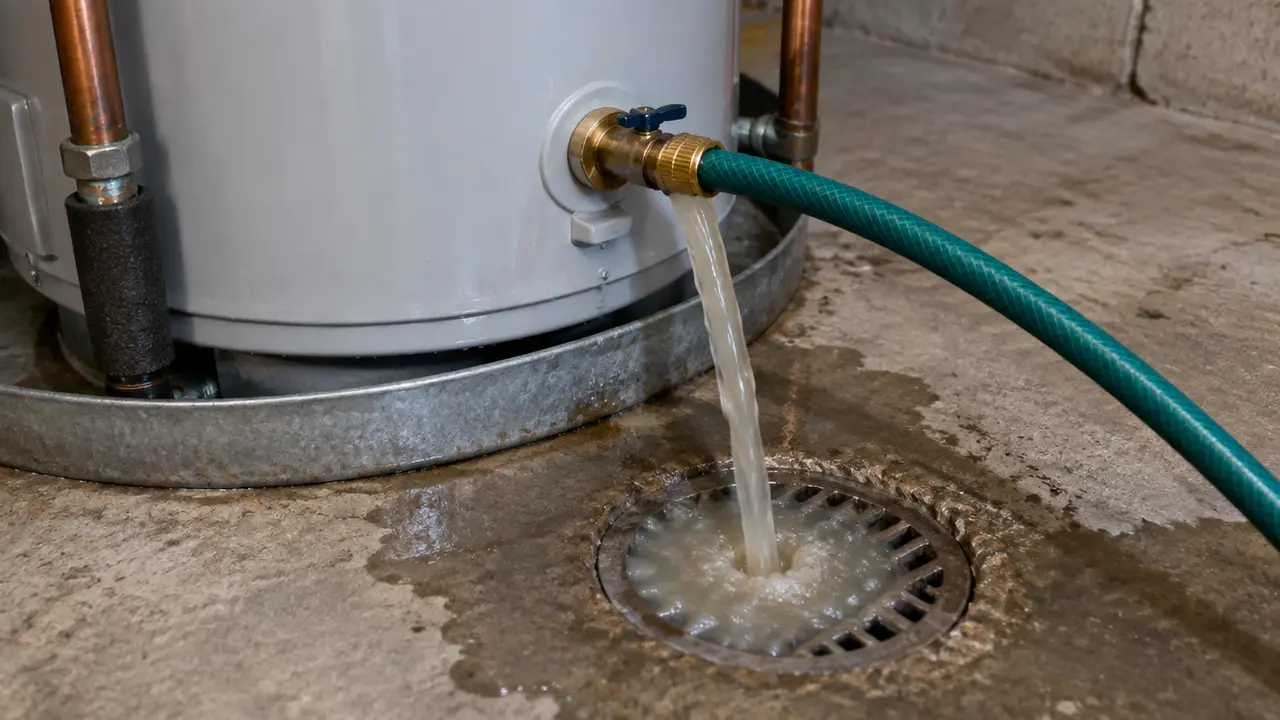
- Yearly: flush the tank, test the T&P valve, and have a gas unit's burner and venting inspected.
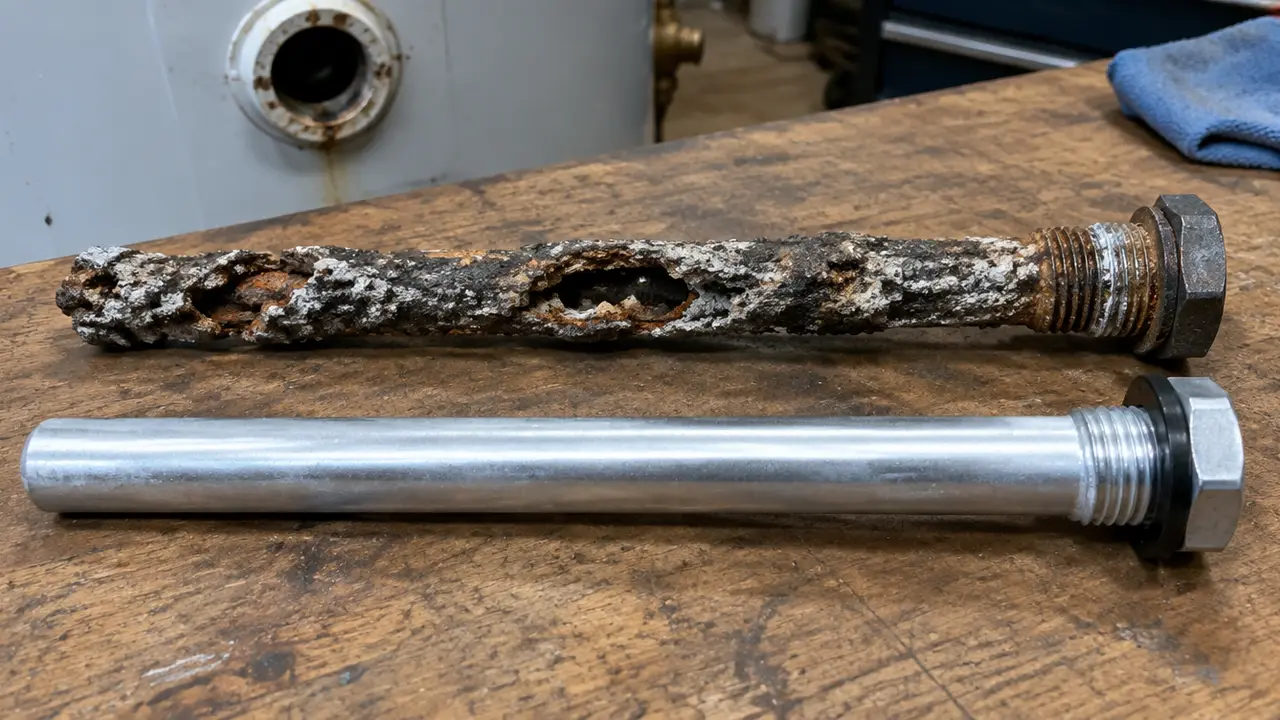
- Every two to five years: inspect the anode rod and replace it before it is spent.
- Winter: keep power-vent, direct-vent and tankless terminations clear of snow and frost.
- Keep a simple log; it helps with warranty claims, technicians and the decision to replace.
01 /What maintenance does a water heater need?
A storage water heater needs four things: sediment removal, anode protection, a working relief valve, and, for fuel-burning units, clean combustion and a clear vent. Everything on the schedule below serves one of those. Health Canada recommends that fuel-burning appliances be professionally inspected at least once a year or as the manufacturer instructs, and your owner's manual lists model-specific tasks that take priority over any general schedule.
| When | Task | Who |
|---|---|---|
| Monthly | Look for leaks and rust, check the flame or listen to the fan, test CO alarms | Owner |
| Every 3–6 months (hard water) | Drain a few buckets from the drain valve | Owner |
| Yearly | Full flush; test the T&P valve; check the discharge pipe; inspect venting | Owner, or pro as part of a service |
| Yearly (gas, propane, oil) | Professional inspection of burner, venting, draft and combustion | Licensed technician |
| Every 2–5 years | Inspect the anode rod; replace if spent | Owner or pro |
| Every winter storm and cold snap | Clear sidewall vent terminations of snow and frost | Owner |
| When anything changes | Recheck after a new furnace, exhaust fan, renovation, softener or pressure valve | Owner and technician |
02 /What should I check every month?
A five-minute monthly look catches most problems early. It needs a flashlight, a dry paper towel and your senses.
- Smell first
Any gas smell near the heater: stop, leave and call the gas utility or 911 from outside.
- Look at the floor and pan
Wipe the base and any pan. Note water, rust flakes or white crust.
- Look at the top
Inlet, outlet, anode port, T&P valve and vent connection: drips, crust, rust or scorching.
- Check the flame or fan
Conventional gas: steady, mostly blue flame through the sight glass. Power vent: no new grinding or rattling.
- Check the discharge pipe
Dry at the outlet. Drips point to pressure; see T&P valve dripping.
- Keep the area clear
No boxes, laundry, paint or chemicals against the heater or blocking its air supply.
- Test CO alarms
Press the test button. Ontario's guidance says monthly; Health Canada says test regularly.
Heat pump water heaters add one monthly or quarterly task: clean the air filter as the manual directs, because a clogged filter slows heating and can trigger error codes.
03 /What is on the yearly water heater service?
Once a year, flush the tank, test the relief valve and, for a gas unit, have a technician check combustion and venting. Many owners book these together in early fall, before the heating season, so the heater and the furnace are both looked at before the house is closed up.
| Type | Yearly tasks |
|---|---|
| Gas or propane tank (natural draft) | Flush; test T&P valve; check draft hood and vent connections for spillage signs; professional burner, pilot, flame arrestor and draft check |
| Power-vent or direct-vent tank | As above, plus check the termination, vent slope, condensate path and fan |
| Electric tank | Flush; test T&P valve; check element covers for leaks or rust; tighten nothing electrical unless qualified |
| Heat pump tank | Flush; test T&P valve; clean filter and check condensate drain; check the unit's error history |
| Gas tankless | Descale the heat exchanger; clean the inlet water filter; professional combustion and vent check |
| Electric tankless | Descale if the manual calls for it; clean the inlet filter |
The flushing procedure, with its stop conditions, is in how to flush a hot water tank. The T&P valve test and what to do if it drips afterwards are in T&P valve dripping. Descaling tankless units is covered in tankless vs tank.
04 /How often should the anode rod be checked?
Check the anode first at three to five years, sooner with a water softener or hard water, then every one to two years. Replace it when the steel core wire shows along a good part of its length. Of all the maintenance items, this is the one that most extends a tank's life, because the tank body is the only part that cannot be replaced.
The anode rods guide covers types, removal and what to do with a seized rod. In the Tank Lifespan Predictor, a replaced anode adds two years to the planning range and yearly flushing adds one, while never flushing takes one away.
05 /What changes with the seasons in Canada?
| Season | What to do | Why |
|---|---|---|
| Fall | Yearly service; test CO alarms; check vent terminations are clear of plants and stored items | Before the house is closed up and appliances run most |
| Winter | Check sidewall terminations after every snowfall and during cold snaps; keep snow piles away | Snow and frost blockages cause lockouts; see power vent in winter |
| Winter | Expect less hot water on very cold days | Colder inlet water reduces effective capacity |
| Spring | Look for water around the heater after the melt; check the floor drain | Basement moisture and drainage issues show up |
| Summer | Insulate sweating cold pipes; drain a few buckets in hard water | Condensation drips can look like a leak |
| Before a long absence | Set the control to VACATION or turn the heater off; close the supply if you are worried about leaks | Saves energy and limits damage if something fails |
| On return | Restore the setting and run each hot tap for a few minutes | Refreshes water that sat in the pipes |
Health Canada's advice to inspect exhaust vents during and after snowstorms is the single most important winter habit for homes with power-vent, direct-vent or tankless water heaters.
06 /What should I leave to a professional?
Owners can safely handle the monthly checks, flushing, T&P testing, cleaning filters and clearing vent terminations. Leave anything that involves gas, combustion or live electrical parts to a qualified person.
Who may legally do gas work varies by province; the can I replace my own water heater guide summarises the rules, and the Ontario, Quebec and Atlantic Canada guides cover the licensing rules in those regions. If your tank is rented, maintenance and repairs may be the rental provider's job under your agreement; check it before paying for work.
07 /Why keep a water heater log?
A one-page log turns maintenance into evidence. Note the install date and model from the rating plate, then add each flush, anode inspection (with a photo of the old rod), T&P test, service visit and repair, with the date and what was found.
- Warranty claims often ask about installation and maintenance.
- Technicians diagnose faster with a history.
- Replacement timing is easier to judge when you can see a pattern of repairs.
- Selling your home goes more smoothly when you can show the water heater's age and care.
Tape the log to the wall beside the heater or keep it with your home records. When the log shows a tank near the end of its range, the Tank Lifespan Predictor and the choosing a water heater checklist help you plan the next one, and you can request quotes on your own timeline.
FAQQuestions people ask
Does a water heater need annual maintenance?
Yes, at minimum a yearly flush and T&P valve test, and for gas, propane and oil units, a yearly professional inspection, which Health Canada recommends for fuel-burning appliances. Your manual may list more.
Does a tankless water heater need maintenance?
Yes. Tankless units need periodic descaling of the heat exchanger, commonly yearly in hard water, and cleaning of the inlet water filter. Gas units also need their venting and combustion checked.
How often should I drain my water heater?
A full flush once a year is the usual baseline; in hard water, also drain a few buckets every three to six months. Follow your manual's interval if it differs.
What happens if you never maintain a water heater?
Sediment builds up, the anode is used up unnoticed, and the tank usually fails earlier, often as a leak. A gas unit's venting or combustion problems can also go unnoticed, which is a safety issue.
How much does water heater maintenance cost?
Owner tasks cost little beyond a hose and your time. A professional service visit, an anode or a T&P valve adds to that; prices vary by city and contractor, so ask for a written scope with any quote.
When is the best time to service a water heater?
Early fall works well in Canada: before heating season, when the furnace is often serviced too, and before vents can be buried in snow.