A conventional gas hot water tank usually lasts about 8 to 12 years, an electric tank about 10 to 15, and a tankless unit 15 to 20 or more with descaling. Those are planning ranges, not promises. Hard water, a spent anode rod, heavy sediment and high pressure shorten a tank's life; flushing, anode replacement and pressure control extend it.
- Planning ranges: gas and power-vent tanks about 8–12 years, electric and heat pump tanks about 10–15, tankless about 15–20.
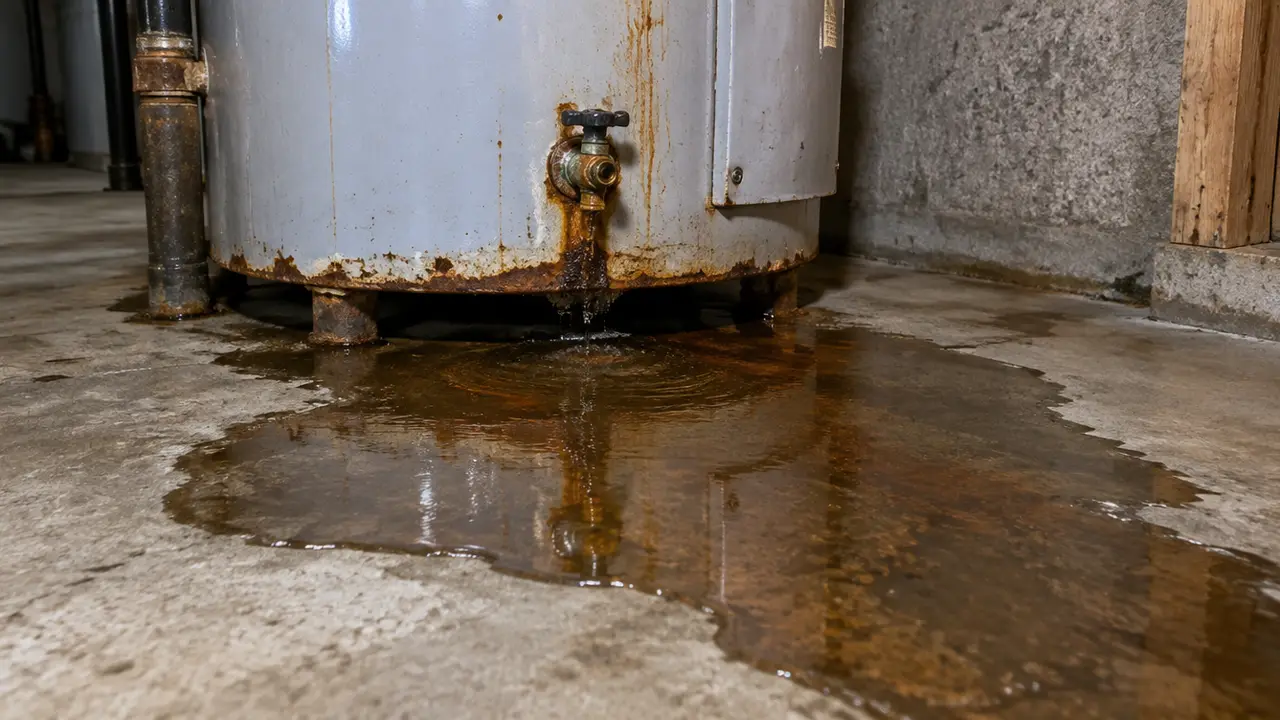
- A steel tank dies from the inside: once the anode rod is spent, the lining's weak spots rust through and the tank body leaks.
- Hard water, water softeners, high supply pressure and sediment all move the end date closer.
- The tank's age is coded in the serial number on its rating plate; the install sticker or permit tag is a second clue.
- Replacing a tank near the end of its range, before it leaks, lets you choose the next one calmly instead of in an emergency.
01 /How long does each type of water heater last?
Most storage tanks in Canadian homes last roughly a decade, but the spread is wide. The table below gives the editorial planning ranges HotWaterTank.ca uses in the Tank Lifespan Predictor. They describe what a typical unit in typical water does, not what any particular model is rated for. Your warranty, your water and your maintenance history move the numbers.
| Type | Planning range | What usually ends its life |
|---|---|---|
| Conventional gas tank (atmospheric vent) | 8–12 years | Tank body corrodes through after the anode is spent; sediment overheats the bottom |
| Power-vent gas tank | 8–12 years | Same tank as a conventional gas unit, plus a fan and electronics that can fail earlier |
| Electric tank | 10–15 years | Tank corrosion; elements and thermostats are replaceable, so they rarely end its life |
| Heat pump (hybrid) tank | 10–15 years | Tank corrosion or a compressor or refrigerant failure outside warranty |
| Tankless (on-demand) | 15–20 years | Heat exchanger scaling or corrosion, usually after skipped descaling |
Electric tanks tend to outlast gas tanks for a simple reason: there is no flame under the tank. A gas burner heats the bottom head of the tank directly, so sediment there insulates the steel from the water and lets it run hotter, which stresses the glass lining. Electric elements sit in the water, and the tank's bottom stays cooler. For the mechanics, see how a hot water tank works.
02 /Why do hot water tanks fail?
A storage tank fails because its steel shell corrodes from the inside until it leaks. The steel is protected in two layers. The first is a glass-like enamel lining fused to the inside of the tank. The lining always has tiny flaws, especially around welds and fittings, so the second layer of protection is the anode rod: a sacrificial rod of magnesium or aluminium alloy that corrodes instead of the steel. Natural Resources Canada's Water Heater Guide notes that the rate the anode dissolves depends on the water's mineral content or hardness and on the integrity of the lining.
- Years 0–4: the anode does its job
The rod slowly dissolves. Hot water stays clear. Sediment begins collecting on the bottom if the water is hard.
- Middle years: the anode thins
In hard or softened water, the rod can be half gone. Sediment builds; gas tanks may start to rumble.
- Late years: the anode is spent
Bare core wire shows. Rust starts at lining flaws. Rusty hot water, a metallic taste or rust at fittings can appear.
- Failure: the tank body leaks
Rust pits through the shell. The leak is usually slow at first, seen as a damp base, a drip under the burner or water under the jacket. It is not repairable.
Everything else on a tank is replaceable: the drain valve, the T&P valve, the thermocouple, the gas control, elements and thermostats, even the dip tube. Only the tank shell is not. That is why the anode rod decides so much of a tank's life, and why replacing the anode once in mid-life is the single most effective way to stretch it.
03 /What shortens a hot water tank's life?
Water hardness, water softening, high pressure, high temperature and sediment are the main factors that shorten tank life. Most of them are about how fast the anode is consumed or how hard the tank's steel is worked.
| Factor | Effect | What you can do |
|---|---|---|
| Hard water | More scale and sediment; a gas tank's bottom runs hotter | Flush yearly; consider a softener, but see the next row |
| Softened water | Softened water is more conductive, so the anode is consumed faster | Check the anode every 2–3 years instead of waiting |
| High supply pressure | The tank flexes more with every heating cycle | Keep a working pressure-reducing valve; control thermal expansion |
| No thermal expansion control on a closed system | Pressure spikes every time the burner runs; T&P valve drips | Install a correctly sized expansion tank |
| Very hot setting | Faster corrosion and scaling | Store near 60 °C and use a mixing valve for safe tap temperature |
| Sediment left in place | Overheats the bottom of gas tanks; buries lower elements in electric tanks | Flush the tank yearly from new |
| Cold, damp or unheated location | Exterior rust at the base and fittings; condensation | Keep the area dry; raise the tank on a stand or pan |
Calgary is a useful example of hardness in practice. The City of Calgary publishes hardness figures for each treatment plant, and they run from roughly 140 to 275 milligrams per litre as calcium carbonate depending on the plant and season, with the Glenmore plant (Elbow River) harder than Bearspaw (Bow River) and winter harder than spring melt. Most hardness scales would call that hard water, so Calgary owners should expect more sediment than owners on soft supplies.
04 /How do I find out how old my water heater is?
The fastest way to date a water heater is the serial number on its rating plate, the label on the side of the jacket. Most manufacturers encode the month and year of manufacture in the first few characters of the serial number, but each uses its own code: some start with a two-digit year, some use a letter for the month, some use a letter pair. Search the manufacturer's name plus “serial number date code”, or call the number on the label.
- Rating plate: model number, serial number, capacity, input rating and often the manufacture date in plain text on newer units.
- Installer sticker: many installers leave a dated sticker on the jacket or the vent.
- Permit or inspection tag: a gas permit tag or inspection sticker near the unit or the meter shows when the work was inspected.
- Home purchase documents: a home inspection report often records the water heater's age.
- Rental records: if the tank is rented, the rental provider can tell you the install date.
Manufacture date is usually within a few months of install date for replacements, but a tank can sit in a warehouse or a builder's garage for a while. For planning, treat the manufacture date as the start of its life.
05 /Should I replace my water heater before it fails?
Replacing a tank near the end of its expected range, before it leaks, is usually the better decision. Natural Resources Canada's Water Heater Guide makes the same point: plan the replacement close to the end of the unit's life so you can make an informed choice rather than being forced into an emergency one. An emergency replacement tends to mean the first available unit, the same type as before and no time to consider a heat pump, a tankless unit or a different size.
| Situation | Usually the better call | Why |
|---|---|---|
| Leak from the tank body, any age | Replace | The shell cannot be repaired |
| Under half of expected life; failed part (thermocouple, element, T&P valve, drain valve) | Repair | Parts are inexpensive; the tank has years left |
| Within the expected range; rusty hot water | Plan replacement | Rust in hot water only usually means the anode is spent and the tank is corroding |
| Within the expected range; failed gas control or power-vent fan | Compare the repair price with a replacement | An expensive part on an old tank rarely pays back |
| Past the expected range, no symptoms | Budget and choose now | The tank is living on borrowed time; pick the replacement before it picks you |
If you are not sure where your tank sits, run the Tank Lifespan Predictor with its age, type, water and maintenance history, and read signs your water heater is failing for the symptoms that move a tank from planning to urgent. When replacement is near, the choosing a water heater checklist and the replacement cost guide help you prepare, and you can request quotes when you are ready.
06 /How can I make my hot water tank last longer?
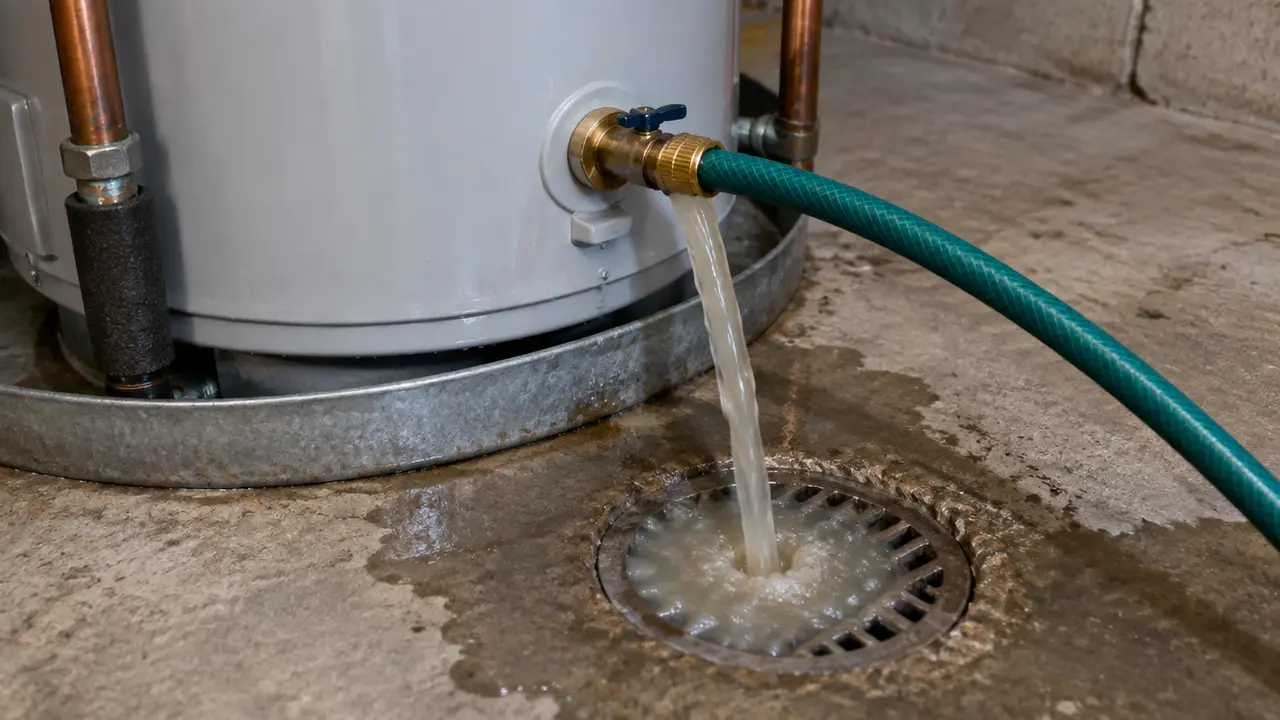
- Flush from year one. Draining sediment yearly is far easier on a new tank than trying to clear a decade of it later. See how to flush a hot water tank.
- Inspect the anode at 3–5 years. Replace it if the core wire is showing along much of its length. In softened water, check sooner.
- Control pressure. If your home has a pressure-reducing valve or a check valve on the supply, the system is closed and needs thermal expansion control. Calgary notes that homes built after 1990 in areas over 80 psi have a pressure-reducing valve.
- Keep a sensible temperature. Around 60 °C in the tank controls bacteria; hotter speeds scaling. Details are in water heater temperature setting.
- Keep it dry and clear. A dry base, clear combustion air openings and no storage against the jacket protect the outside of the tank.
- Follow a schedule. The maintenance schedule turns these steps into a calendar.
The anode rod is the part that decides when a tank dies. Replace it once, in time, and the tank gets a second life.
None of this makes a tank immortal. A well-maintained tank in hard water may still reach the end of its range; a neglected tank in soft water may outlive it. What maintenance buys you is warning: a tank that is looked at every year rarely surprises its owner with a flooded basement.
FAQQuestions people ask
Can a hot water tank last 20 years?
Some do, usually electric tanks in soft water whose anodes were replaced once or twice. A 20-year-old gas tank is well past the typical range, and while it may still work, the chance of a tank-body leak rises every year. Keep a leak alarm or pan under it and plan its replacement.
Does a longer warranty mean a longer-lasting tank?
Often, but not always. Tanks sold with longer warranties frequently have larger or additional anodes and heavier construction. Natural Resources Canada notes that warranties range from one year to lifetime and advises weighing the added cost against the useful life. Read what the warranty covers: many cover the tank only, not labour.
Do tankless water heaters really last longer?
Their heat exchangers have no large steel vessel to rust through, so they commonly last longer than tanks, but only if they are descaled on schedule in hard water. A scaled heat exchanger overheats and can fail early. Follow the manual's descaling interval.
Is it worth repairing a 10-year-old water heater?
For an inexpensive part such as a thermocouple, T&P valve or element, often yes, provided the tank body is dry and the hot water is not rusty. For an expensive part, such as a gas control or power-vent blower, compare the repair price with a replacement first.
How do I know my water heater is about to fail?
The strongest warning signs are rust-coloured hot water, a damp base or drip from under the jacket, loud rumbling in a gas tank, and age beyond the typical range. A leak from the tank body itself means replacement, not repair.
Does a water softener shorten water heater life?
It can reduce scale, which helps, but softened water consumes the anode rod faster. If you soften, inspect the anode more often, every two to three years, so the tank is never left unprotected.