For a Strathmore tankless comparison, check required hot-water flow, cold-water temperature rise, gas capacity and an approved vent route before choosing equipment. Compare the complete conversion with a storage-tank replacement. Confirm Town trade-permit applications and inspection arrangements, and identify qualified plumbing, gas and electrical work in the proposal.
- Tankless output depends on temperature rise as well as advertised flow.
- The existing tank’s gas connection does not prove capacity for tankless equipment.
- Strathmore handles applications through Town Development Services and identifies Park Enterprises for inspections.
01 /How should two simultaneous showers be compared?
Compare the same household-use scenario for storage and tankless proposals. Give the Strathmore installer the intended shower overlap, fixture information and any bath or laundry draw occurring at the same time. Ask for the selected tankless model’s flow at the temperature rise used in its assessment, and for the storage option’s delivery and recovery assumptions. If either choice depends on staggering uses, have that limitation stated clearly. Do not accept a peak flow figure without its temperature context or a tank size without an explanation of usable delivery. The proposal should make the expected experience understandable: which combinations can be served and what conditions reduce performance. That provides a better comparison than treating continuous heating as a promise of unrestricted simultaneous demand.
02 /Could the cold-water sandwich affect your choice?
Ask about temperature behaviour during interrupted use if the household frequently stops and restarts a shower. With some tankless arrangements, water already heated in the pipe can be followed by cooler water before newly heated water arrives. Whether that occurs and how noticeable it is depends on the selected equipment and distribution layout. Ask the installer how the proposed model handles short draws and intermittent use, including any buffer or recirculation features being offered. Require those features to be identified in the scope, with their maintenance and energy implications. A symptom at one shower may still need fixture diagnosis, so do not attribute every fluctuation to tankless technology. Compare how each proposed system addresses your actual routine rather than relying on a general claim about comfort.
03 /Is wall space enough to justify a tankless conversion?
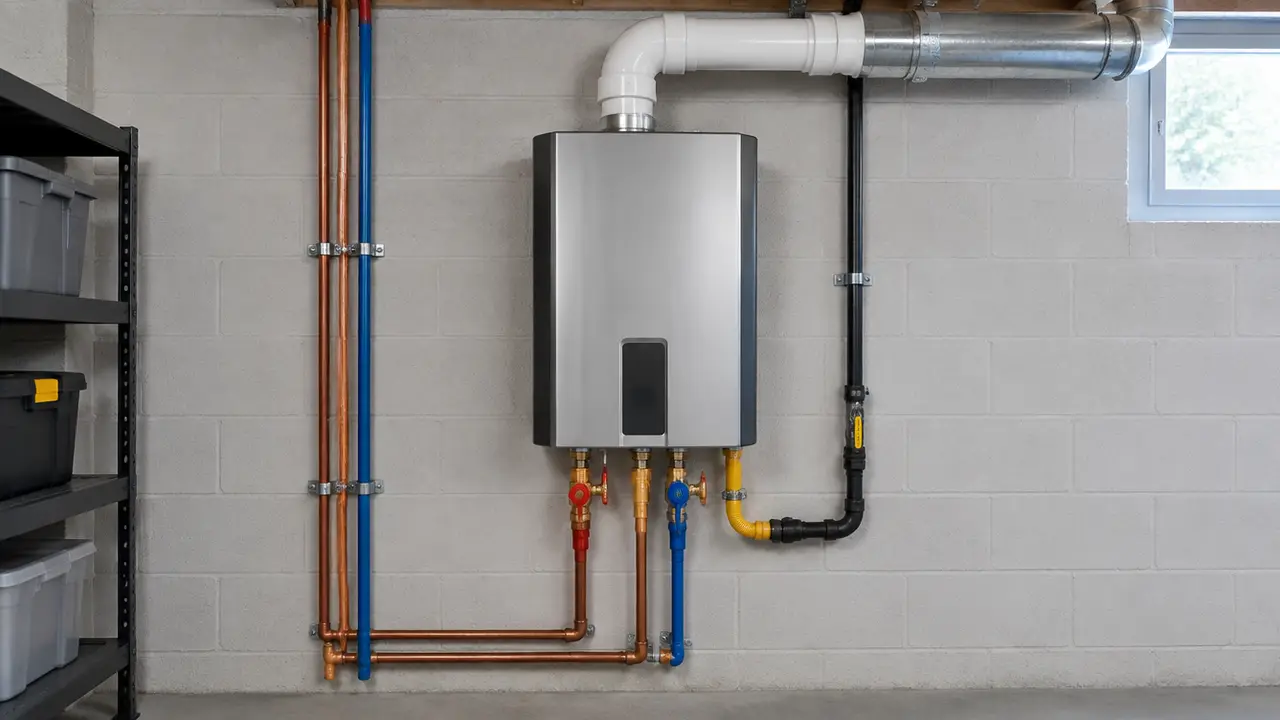
Wall space is only the beginning of a fit assessment. Ask the installer to show service clearances around the heater, access to isolation valves and the working space needed for maintenance. Identify the vent route, gas supply, electrical connection and condensate destination on the same sketch. Compare those requirements with the space recovered by removing the storage tank. If the motivation is more storage in the mechanical room, make sure stored items will not obstruct servicing or equipment clearances. Ask how the unit is mounted and whether opening finished walls is necessary. A storage replacement with a different footprint may also be worth considering. The decision should account for the whole room and installation work, not just the dimensions of a wall-mounted cabinet.
04 /What belongs in a tankless maintenance provision?
A maintenance provision should identify the selected manufacturer’s tasks and how they can be performed on this installation. Ask whether isolation and flushing connections are included, whether water-treatment information affects the service plan and how the heat exchanger will be accessed. Request instructions for recognizing a service reminder or fault without dismantling the appliance. Keep any optional service agreement separate from the equipment purchase and understand what it covers. If the provider proposes a fixed maintenance interval, ask what model guidance and site conditions support it rather than accepting a universal schedule for every Strathmore property. Compare that ongoing responsibility with the storage option’s own maintenance requirements. Neither appliance type becomes maintenance-free simply because the installation is new.
05 /How do you compare a conversion allowance with a firm scope?
A conversion allowance is meaningful only when its assumptions are visible. Ask whether gas capacity and vent routing have been assessed or whether the proposal merely sets aside an amount for later work. Identify which findings could change the scope, who investigates them and how additional work is authorized. Require electrical supply, condensate handling, removal of unused connections and finish repair to be included or explicitly excluded. Compare a storage replacement and a tankless conversion using those same boundaries, including permit and inspection coordination through the Town’s process. If equipment is substituted, request the new model’s performance information and connection requirements before installation. This avoids treating an incomplete conversion estimate as comparable to a fully assessed storage installation simply because both proposals show a single total.
06 /Can tankless equipment serve your busiest winter use?
Tankless capacity must be compared at the temperature rise your house requires. Temperature rise is the difference between incoming cold water and the target delivery temperature; colder supply requires more heating for the same flow. List overlapping showers, a bath fill and other significant draws for the Strathmore home. Ask the installer to use the selected model’s performance information rather than its headline flow rating. A storage tank buffers demand with stored water, so comparing litres of storage directly with a tankless flow number is not meaningful.
07 /Will the gas supply support the proposed conversion?
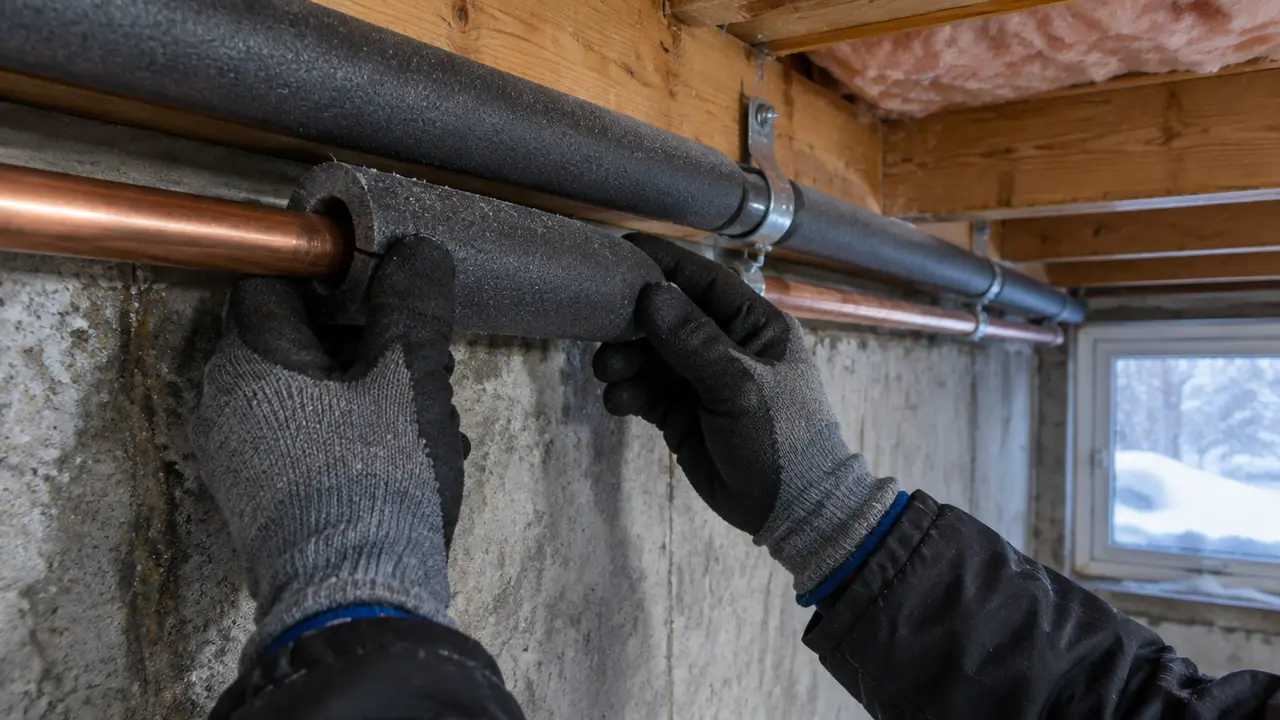
The gas system needs assessment for the selected appliance and other connected loads. A tankless heater can have a different input requirement from the tank it replaces. Have a qualified gasfitter evaluate supply, piping and the proposed connection; the diameter of a visible short section does not establish the entire system’s capacity. Ask whether the quote includes any required piping changes and coordination with the utility. Include furnaces and other gas appliances in that review so the water-heater choice is not assessed in isolation.
08 /Where will venting, power and condensate go?
A wall-mounted heater still needs a workable installation around it. Ask the gasfitter to identify the approved vent materials and outdoor termination route. Many tankless models need electrical power for controls; assign any new supply work to an electrician. Condensing equipment also needs a manufacturer-compliant condensate arrangement reviewed with the plumber. Map these routes through the actual mechanical room before removing the tank. Ask whether drilling, wall repair, drain modifications and unused vent removal are included. Saving floor space does not automatically simplify these connections.
09 /How should Strathmore permits be arranged?
Strathmore’s safety-code page identifies gas, plumbing and electrical permits for new work, renovations, connections and alterations. It directs completed forms to Town Development Services and identifies Park Enterprises for building and utility inspections. Confirm the forms and inspection stages for your tank replacement or conversion, with the responsible applicant named in writing. Use the Town process for a property within Strathmore limits; a surrounding Wheatland County address needs its own jurisdiction check. Keep approvals and inspection outcomes separate from a contractor’s statement that installation is finished.
10 /What maintenance and outage differences matter?
Compare the selected models’ maintenance needs and power dependence before buying. Tankless equipment may need periodic flushing based on manufacturer instructions and water conditions, with service valves and access provided at installation. Ask who performs that maintenance and what is excluded from the proposal. An electrically controlled gas heater may stop producing hot water during a power outage; a storage tank can retain already-heated water for a time. Do not assume gas fuel means power independence. Choose based on the specific appliance rather than a general equipment category.
11 /How do you compare the two complete proposals?
Request separate scopes for retaining storage and converting to tankless. Each should name the model, plumbing work, gas and vent changes, electrical work, permits, removal and commissioning. Use the replacement cost guide for scope comparison and the energy cost tool for your operating assumptions. Check applicable trade credentials through Alberta Tradesecrets. HotWaterTank.ca is an independent HAUSE Home information and service-request site, not a Strathmore installation company. Include simultaneous demand and known access constraints when requesting quotes so the provider can assess both alternatives.
FAQQuestions people ask
Does tankless mean unlimited simultaneous hot water?
It can heat continuously within its operating capacity, but simultaneous flow remains limited. Compare model performance at the required temperature rise and identify which fixtures you expect to use together.
Can tankless use the existing tank’s vent?
Do not assume so. The appliance’s approved vent system and route must be assessed by a qualified gasfitter. Include replacement venting and any abandoned components in the scope.
Should permit applications go directly to the inspector?
Strathmore’s published guidance directs forms to Town Development Services while identifying Park Enterprises for inspections. Confirm the current application and booking responsibilities for your project.
Can I flush tankless equipment with any cleaning chemical?
Follow the selected manufacturer’s service instructions and have appropriate servicing arranged. Do not improvise chemicals or dismantle gas equipment. Leave and call from outside if gas is suspected.