Home insurance in Canada typically covers sudden and accidental water damage from indoor plumbing, heating or a domestic appliance such as a water heater, but not the cost of repairing or replacing the failed tank itself. Gradual leaks and wear are commonly excluded, and some insurers attach conditions to older tanks. Check your policy and ask your broker how its wording applies to your heater.
- Policies usually respond to the water damage, not the worn-out heater that caused it.
- A sudden burst reads very differently to an adjuster than months of seepage, which is commonly excluded as gradual.
- Some insurers ask the tank's age and set conditions for older tanks; the threshold varies, so ask your broker.
- Your policy expects you to limit further damage: stop the water, photograph everything and keep receipts and damaged items.
- With a rented tank, the provider usually handles the unit and your own insurer usually handles the damage first.
01 /Does home insurance cover a leaking hot water tank?
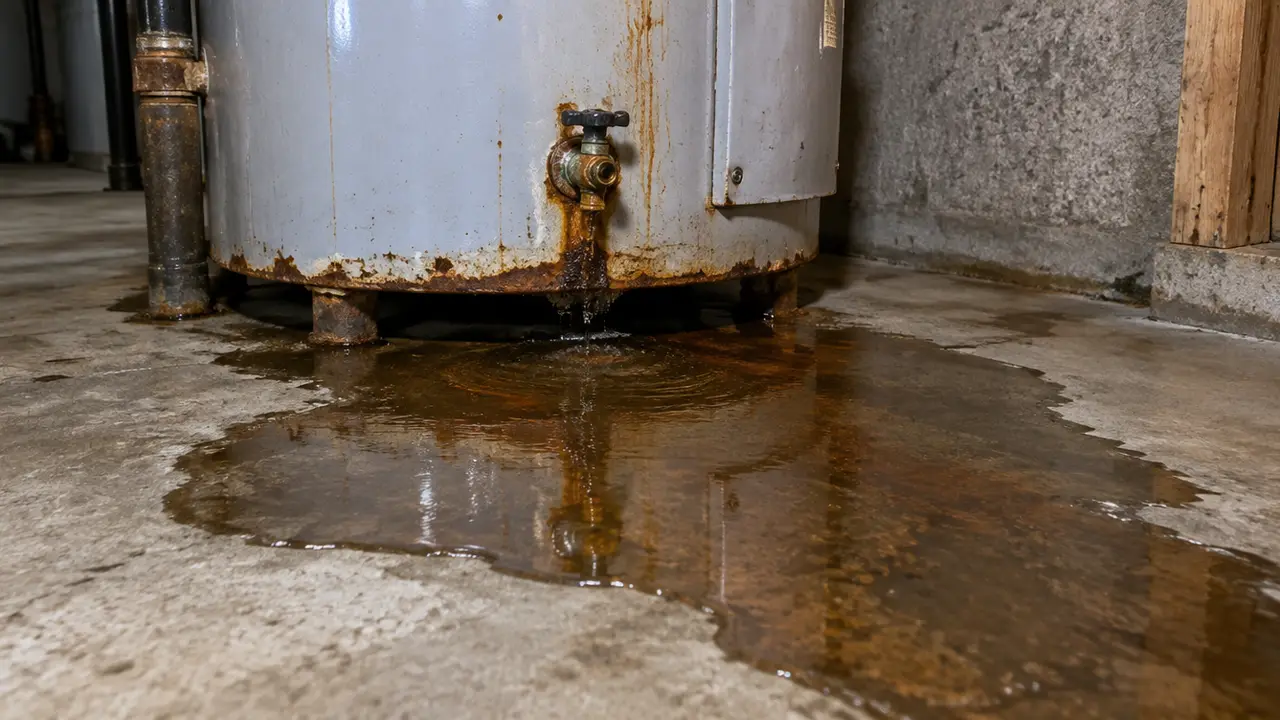
Usually it covers the damage the water causes, not the tank. The Insurance Bureau of Canada (IBC) describes home insurance as typically covering sudden or accidental water damage from indoor plumbing, heating or air conditioning, and water damage from a malfunctioning appliance, while the cost of repairing the appliance that caused it is excluded. A water heater sits right in that gap: the flooring, drywall and belongings it soaks may be covered, and the heater usually is not.
| Loss | Usual treatment | Why |
|---|---|---|
| Tank bursts overnight, floor and drywall soaked | Often covered, less the deductible | A sudden and accidental escape of water |
| The failed tank itself | Usually not covered | Wear and corrosion, and the appliance's own repair cost, are excluded |
| Months of slow seepage and a rotted subfloor | Often excluded or limited | Gradual damage is treated as maintenance |
| Belongings stored in the basement | Depends on your contents coverage | Named-perils contents cover may not list this |
| Mould from a leak left running | Often excluded or capped | Linked to gradual or unrepaired leaks |
| Hotel or rent while the home is unliveable | May be paid as additional living expenses | Covers the increase in living costs, not everything |
| Damage while the house sits empty in winter | May be excluded | Policies often set conditions for unoccupied homes |
Every line of that table depends on the policy wording, the insurer and the facts of the leak. Read your water damage clause and its exclusions, then check your policy and ask your broker how it applies to your tank before you need to claim.
02 /What is the difference between sudden and accidental and gradual damage?
Sudden and accidental means the water escaped at once and unexpectedly; gradual means it escaped slowly over a period in which someone could have noticed and stopped it. IBC's summary of comprehensive coverage lists the sudden and accidental escape of water from an indoor plumbing, heating, sprinkler or air conditioning system, or from a domestic appliance, and separately explains that gradual deterioration is natural and expected rather than an insured peril.
Water heaters produce both kinds of loss. A tank that splits at the bottom seam at 3 a.m. and empties across the basement is the textbook sudden event. A fitting that wept for a season behind stored boxes, leaving rust trails and a soft subfloor, looks gradual to an adjuster even if you only noticed it today. Evidence an adjuster reads includes:
- tide marks and staining that show repeated wetting and drying;
- rust trails down the jacket and crusted deposits on fittings;
- rot, delamination or mould, which take weeks to develop; and
- the tank's age compared with its expected life.
Describe what you saw and when, accurately, and let the evidence speak. Guessing at a timeline in either direction causes problems later. The leaking tank guide explains how to tell a fitting leak from a failed tank body.
03 /Will insurance pay for a new water heater?
Rarely. The tank failed through wear and corrosion, which policies treat as the owner's cost, so plan to fund the replacement yourself and use any claim for the damage to the house and contents. If your policy carries an endorsement for equipment or appliance breakdown, ask whether it reaches the heater.
As 2026 planning estimates from the replacement cost guide, a like-for-like atmospheric gas tank plans at $1,800 to $3,200 installed and an electric tank at $1,400 to $2,600. Add-ons often priced at the same visit include an expansion tank at $250 to $500 and a drain pan with a leak sensor and automatic shut-off at $150 to $600.
04 /Do insurers set age limits on hot water tanks?
Some do. An insurer may ask the water heater's age when you apply or renew, and some attach conditions to older tanks: a requirement to replace it by a set age, a lower limit or higher deductible for water damage it causes, or an exclusion. The age that triggers a condition, and what the condition is, vary by insurer and change over time, so there is no national rule to lean on.
- Find the tank's age
Look for the installation invoice, a permit record or a date written on the tank. The serial number on the rating label often encodes the manufacture date, which the manufacturer can decode.
- Give your broker the real date
A wrong answer on an application can cause more trouble at claim time than an old tank does.
- Ask what the policy says
Ask whether any age condition, deductible or exclusion applies to the water heater, and what proof of replacement the insurer wants.
- Keep proof of replacement
Keep the invoice with model and serial numbers, the permit or inspection record, and photos of the new installation.
The Tank Lifespan Predictor estimates where your tank sits within its expected range, so you can replace it on your schedule rather than the tank's. How long hot water tanks last explains the planning ranges behind it.
05 /What should you do in the first hour after a leak?
Stop the water, then record the scene. IBC's claims guidance says plainly that your policy requires you to act to limit any further damage, so reasonable mitigation is part of your side of the contract.
- Make it safe
Turn off the gas or power to the heater and close its cold supply valve, keeping clear of wet electrical equipment. The leaking tank guide has the full sequence.
- Photograph before you clean
Take wide shots and close-ups: the tank, the failure point, the rating label, the water on the floor, and affected walls and belongings.
- Limit the spread
Move belongings to dry areas, lift items off the floor and start removing water with a wet vacuum or pump.
- Call your insurer or broker
Most insurers run a 24-hour claims line. Say what happened and when you found it, and ask whether to book emergency drying yourself or wait for their contractor.
- Keep receipts and damaged items
Keep receipts for clean-up and emergency work. IBC advises keeping damaged items unless they are dangerous or a health hazard.
- Keep the old tank until you are told
Ask before the installer hauls it away. If it must go, photograph the label, the failure point and the burner area first.
06 /How does a water heater damage claim work?
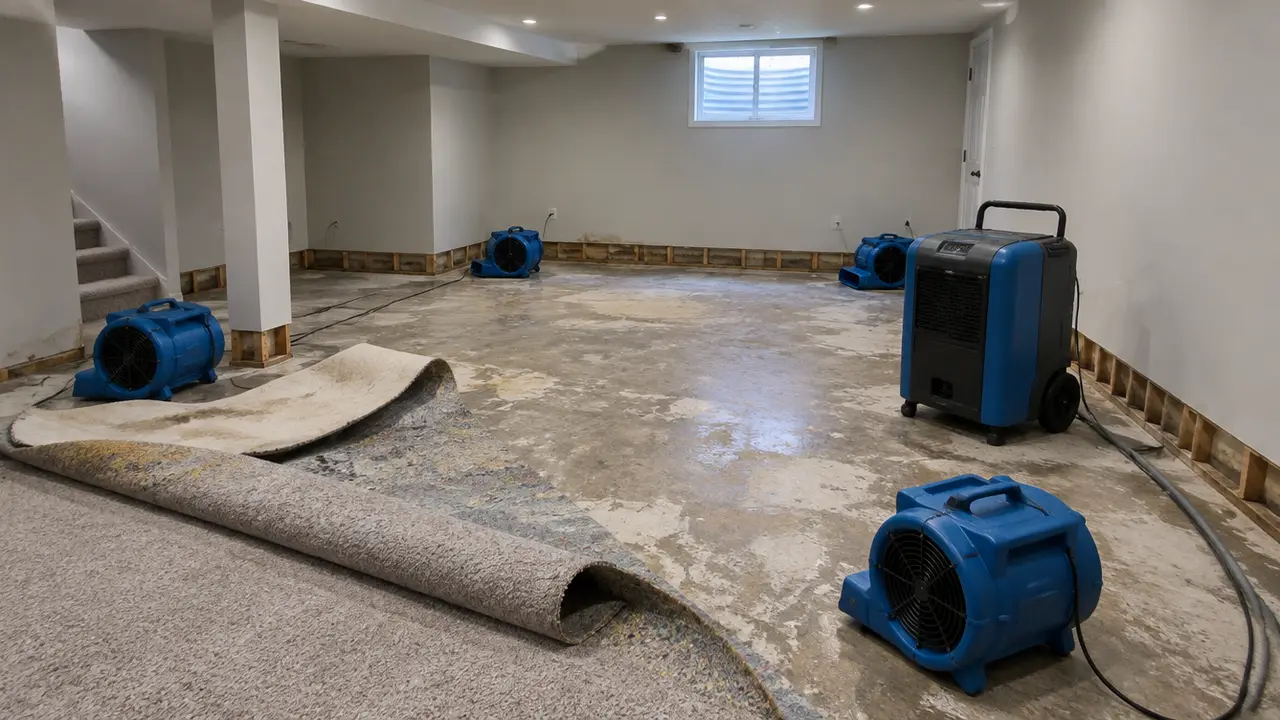
After you report the loss, the insurer assigns an adjuster to examine it and decide what is covered. You will usually complete a proof of loss, a form listing what was damaged and its value, which you sign and swear to be true; IBC notes it typically has to be returned within 30 days. IBC also notes that you can use a contractor or supplier of your choice for the repairs.
| Document | Why it helps |
|---|---|
| Photos and video from the day | Show how much water escaped, where it went and what failed |
| Heater invoice with model and serial number | Establishes the age, type and installer |
| Permit or inspection record | Shows the installation was reviewed; some insurers ask |
| Maintenance notes | Flushing, anode and valve work show the tank was looked after |
| Clean-up and emergency repair receipts | Needed to recover what you spent limiting the damage |
| Rental agreement, if rented | Shows who owned the tank and who was responsible for it |
| List of damaged belongings with values | The basis of the contents part of the claim |
If the home cannot be lived in during repairs, additional living expenses may apply. IBC explains that this covers the increase in your cost of living while displaced, not all of your expenses.
07 /Is a small water heater leak worth claiming?
Sometimes not. The deductible comes off every claim, and some policies apply a separate or higher deductible to water damage. When the damage is close to the deductible, a claim returns little, and a claims history can affect future premiums or renewal terms. Before filing, ask your broker two questions: what is my water damage deductible, and how could this claim affect my renewal? Then decide with the repair estimate in hand.
Do not let that calculation delay the clean-up. Stopping the leak and drying the area are worth doing whether or not you claim, and a small leak left wet turns into exactly the kind of gradual damage policies exclude.
08 /Who pays if a rented water heater floods the basement?
Usually two parties are involved. The rental provider normally repairs or replaces the rented unit under the agreement, while water damage to your home and belongings generally goes through your own home insurance first. If the tank's owner or installer was at fault, your insurer may try to recover what it paid from them. Tell both the provider and your insurer, give each the other's contact details, and do not sign a release or settlement from the provider until your insurer has seen it.
Keep the rental agreement with your policy, since it shows who owned and maintained the tank. If a leak has you thinking about leaving the rental, how to cancel or buy out a rented water heater covers buyouts and returns.
09 /How can you lower the risk before the next leak?
- Protect the floor. A drain pan piped to a floor drain, a leak alarm and an automatic shut-off valve all cut the damage from a failure; see water heater leak protection. Some insurers ask about such devices; ask yours whether any count.
- Replace on schedule. A planned replacement costs less than an emergency one and keeps you clear of age conditions.
- Keep the space clear. Store nothing against the tank, and keep the floor drain open so escaping water has somewhere to go.
- Keep the records together. Invoice, permit, maintenance notes and photos in one folder.
If you disagree with a claim decision, IBC's dispute steps start with asking your broker, agent or adjuster to explain it and escalating to a claims supervisor, then the insurer's own ombudsperson or complaint process. If that does not settle it, the General Insurance OmbudService (1-877-225-0446) reviews claims and coverage disputes, and your provincial superintendent of insurance is the next step. IBC's Consumer Information Centre (1-844-227-5422) answers general insurance questions.
FAQQuestions people ask
Is a hot water tank covered by insurance?
The tank itself usually is not, because it fails through wear and corrosion. Sudden water damage it causes to the house is often covered, subject to the deductible and exclusions. Check your policy and ask your broker.
Is a slow water heater leak covered by insurance?
Slow leaks are the weak spot. Policies commonly exclude gradual damage, such as months of seepage that rotted a subfloor, while covering sudden escapes of water. How your insurer classifies a leak depends on the evidence and the wording.
Will home insurance pay for a new hot water heater?
Usually not. The replacement is normally your cost, or the rental provider's if the tank is rented. A claim covers resulting damage where the policy allows.
Does insurance cover water damage from an old hot water tank?
It may, but some insurers set conditions for older tanks, such as requiring replacement by a set age, raising the water deductible or excluding the damage. Ask your broker what applies at your tank's age.
Should I call my insurer about a small hot water tank leak?
Ask your broker about your water deductible and how a claim could affect renewal before you file. Stop the leak and dry the area either way.
Do water leak detectors lower home insurance premiums?
Practice varies by insurer. Ask whether yours recognises leak alarms or automatic shut-off valves, which models or installations qualify, and what proof it needs.