A rotten egg smell only in the hot water usually comes from the water heater: bacteria and a magnesium anode rod convert sulphate in the water to hydrogen sulphide gas. Flushing and disinfecting the tank, then replacing the magnesium anode with an aluminium-zinc or powered anode, usually solves it. If cold water smells too, the source is the well or supply. If the air smells, treat it as a gas leak.
- Smell in the air near the tank is a possible gas leak: leave and call. Smell in the running hot water is a water problem.
- Hot only points to the water heater; hot and cold points to the well, supply or a treatment device.
- The usual chemistry: sulphate in the water, sulphate-reducing bacteria in the warm, oxygen-poor tank, and a magnesium anode.
- Never remove the anode without replacing it: the tank corrodes faster and the warranty can be voided.
- Health Canada treats hydrogen sulphide in drinking water as an aesthetic issue because of its offensive odour at very low levels.
01 /Is it a gas leak or a water smell?
Decide this first, because the two need opposite responses. Natural gas and propane are odourised with a sulphur compound so that leaks can be smelled, and many people describe that odour as rotten eggs. Hydrogen sulphide in hot water smells similar. The difference is where the smell is.
| Clue | Probably a gas leak | Probably smelly water |
|---|---|---|
| Where the smell is | In the air around the water heater, furnace, meter or gas lines, even with no tap running | At the tap or shower, only while water runs, strongest in the first few seconds |
| When it appears | Any time; may be getting stronger | When hot water is used, especially after the tank sat unused |
| What to do | Leave now, do not touch switches or flames, call the gas utility or 911 from outside | Work through the steps below |
02 /Why does my hot water smell like rotten eggs?
Hot water smells like rotten eggs when hydrogen sulphide gas forms inside the water heater. The recipe has three ingredients: sulphate dissolved in the water, which is common in both well and municipal supplies; sulphate-reducing bacteria, which thrive in warm, oxygen-poor water such as the bottom of a storage tank; and the tank's magnesium anode rod.
The New Brunswick government's fact sheet on rotten-egg water describes this directly: magnesium corrosion-control rods protect the tank lining but can, under the right conditions, chemically reduce naturally occurring sulphates into hydrogen sulphide, and sulphate-reducing bacteria usually flourish on the hot water side. It notes the problem often appears in newer water heaters, when the anode is fresh and most active.
- Low use: water that sits in a tank for days, such as after a vacation or in a cottage, gives the bacteria time to work. The first draw smells worst.
- Softened water: softened water is more conductive, which can make the anode more active.
- Lower tank temperatures: bacteria are more comfortable in a tank kept well below 60 °C.
- Well water: private wells can carry more sulphate, bacteria or dissolved hydrogen sulphide than treated municipal water.
03 /How do I find where the smell comes from?
Run the hot and cold taps separately at a few fixtures, including one close to the water heater, and sniff each. The pattern tells you where to look. The New Brunswick fact sheet uses the same logic.
| Pattern | Likely source | First step |
|---|---|---|
| Hot water only, all fixtures | The water heater | Flush and disinfect the tank; replace the anode |
| One sink only, hot and cold | The drain or trap, not the water | Clean and disinfect the drain; run water to refill the trap |
| Hot and cold, only softened or filtered water | Bacteria or organic build-up in the treatment device | Service or sanitise the device as its maker directs |
| Hot and cold, fades after running a few minutes | Bacteria in the well or distribution piping | Shock chlorination of the well system, per provincial guidance |
| Hot and cold, constant | Hydrogen sulphide in the groundwater | Lab test, then a treatment system |
| Hot and cold on a municipal supply | Unusual; could be the supply or building plumbing | Contact your water utility (for example, 311) |
If you are on a municipal supply and only the hot water smells, the water heater is the source in almost every case.
04 /How do I get rid of the rotten egg smell in my water heater?
Work from the cheapest step to the most involved. Many households need only the first three.
- Flush the tank
Drain and stir out sediment, which shelters bacteria. See how to flush a hot water tank.
- Disinfect
For wells, shock chlorinate the well and distribution system, which includes the water heater, following your province's instructions. Some water heater manufacturers describe a tank disinfection with chlorine bleach or hydrogen peroxide; use only the product, amount and contact time your manual gives, and flush thoroughly afterwards.
- Replace the magnesium anode
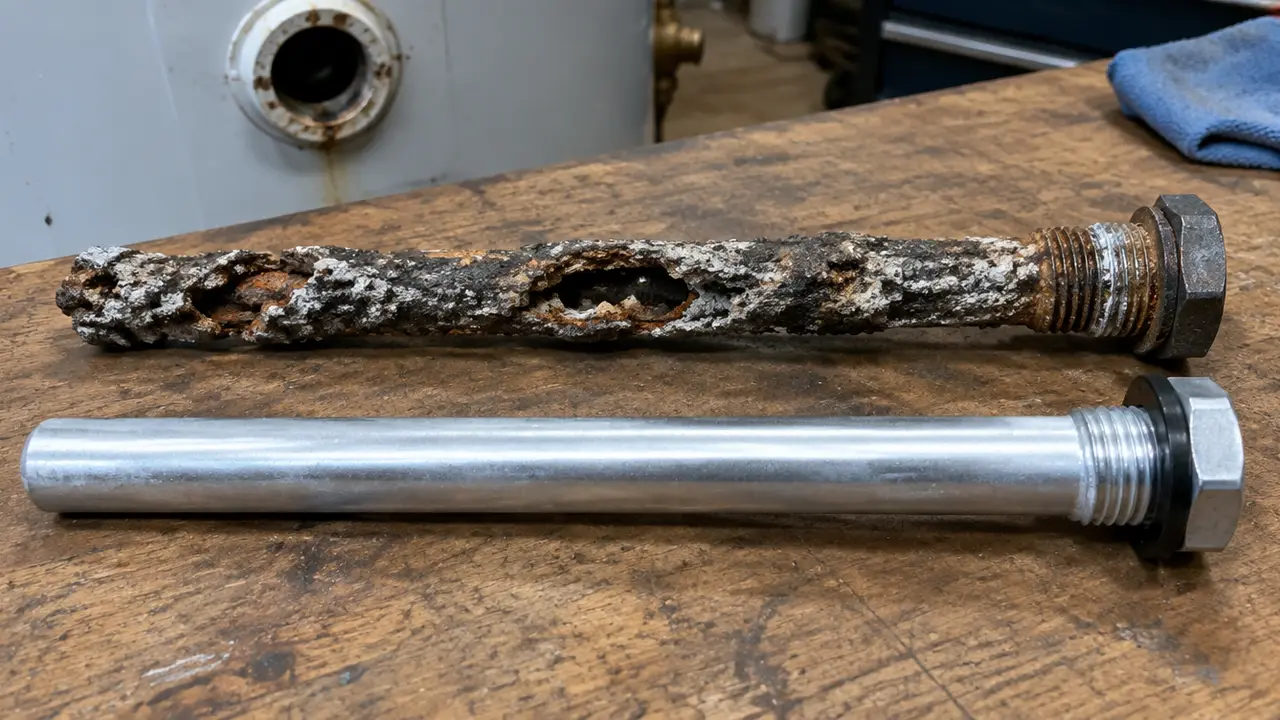
Swap it for an aluminium-zinc alloy anode or a powered (impressed-current) anode. Both reduce or stop hydrogen sulphide production while still protecting the tank. See anode rods.
- Keep the tank hot enough
Storing water around 60 °C discourages bacterial growth and matches federal public health advice for controlling Legionella. Use a mixing valve so taps deliver about 49 °C. Some manuals describe a short high-temperature treatment; follow it exactly and keep everyone away from hot taps while it runs.
- Treat the water if needed
If cold water smells too and disinfection does not last, get a lab test for hydrogen sulphide and choose a treatment system sized to the result.
The New Brunswick fact sheet adds an important warning: removing the magnesium rod without replacing it with a different type voids the water heater warranty, because it can lead to earlier deterioration of the tank. Pulling the anode out stops the smell and starts the countdown to a leak.
05 /Is rotten egg smelling hot water safe?
At the levels that cause a smell in household water, hydrogen sulphide is mainly an aesthetic problem. Health Canada's drinking water guidelines set an aesthetic objective for sulphide of 0.05 mg/L or less, explaining that hydrogen sulphide is an issue mainly because of its offensive rotten-egg odour and its low odour threshold. The same document notes it can react with iron, steel, copper and galvanised piping to form black water and can speed corrosion.
So the smell is a nuisance and a plumbing concern rather than a health emergency. Two cautions still apply. First, the conditions that grow sulphate-reducing bacteria, a warm tank kept too cool, are the same conditions Legionella likes; the Public Health Agency of Canada advises keeping a home water heater at a minimum of 60 °C. Second, if you are on a private well and have any doubt about water quality, test it; provincial health agencies can advise on testing.
06 /Which anode rod is best for smelly water?
Some rented tanks come with a service arrangement; if yours is rented, ask the provider to swap the anode type rather than doing it yourself. For owned tanks, the anode replacement steps and the stop conditions are in the anode rods guide. If the tank is old and smells, rumbles and runs short too, compare with a replacement using the Tank Lifespan Predictor and request quotes.
FAQQuestions people ask
Why does only my hot water smell like sulphur?
Because the odour is being made inside the water heater. Sulphate-reducing bacteria in the warm tank and a magnesium anode convert sulphate in the water to hydrogen sulphide. Cold water bypasses the tank, so it does not smell.
Can I just remove the anode rod to stop the smell?
No. The smell stops, but the tank loses its corrosion protection and can fail years early, and removing the anode without a replacement can void the warranty. Replace it with an aluminium-zinc or powered anode instead.
Will turning up the water heater temperature get rid of the smell?
Keeping the tank around 60 °C discourages bacteria and is the federal public health recommendation for Legionella control. A brief higher-temperature treatment is described in some manuals; follow yours exactly and use a mixing valve to protect against scalds.
Why did my new water heater start smelling like rotten eggs?
New tanks have fresh, highly active magnesium anodes, which is when the reaction is often strongest. The New Brunswick fact sheet notes the problem often appears in newer water heaters.
Does a water softener cause rotten egg smell?
It can contribute, because softened water can make the anode more active, and a poorly maintained softener can harbour bacteria itself. If only softened water smells, service the softener.
Is hydrogen sulphide in water dangerous?
At the low levels that cause odour in household water, Health Canada treats it as an aesthetic issue, with an objective of 0.05 mg/L or less. It can corrode plumbing and blacken water. Test a private well if you are unsure of its quality.